

From AI Productivity to Business Performance: What I’m Seeing Inside Australian Businesses
By Caroline Kennedy | Published September 14, 2026
From AI Productivity to AI Business Performance: What I'm Seeing Inside Australian Businesses
I’ve spent quite a bit of time recently talking to Australian businesses about AI. Not theoretically.
Actually sitting with business owners and leaders and looking at what they’re doing with it, what they could be doing with it, and where it might genuinely make a difference.
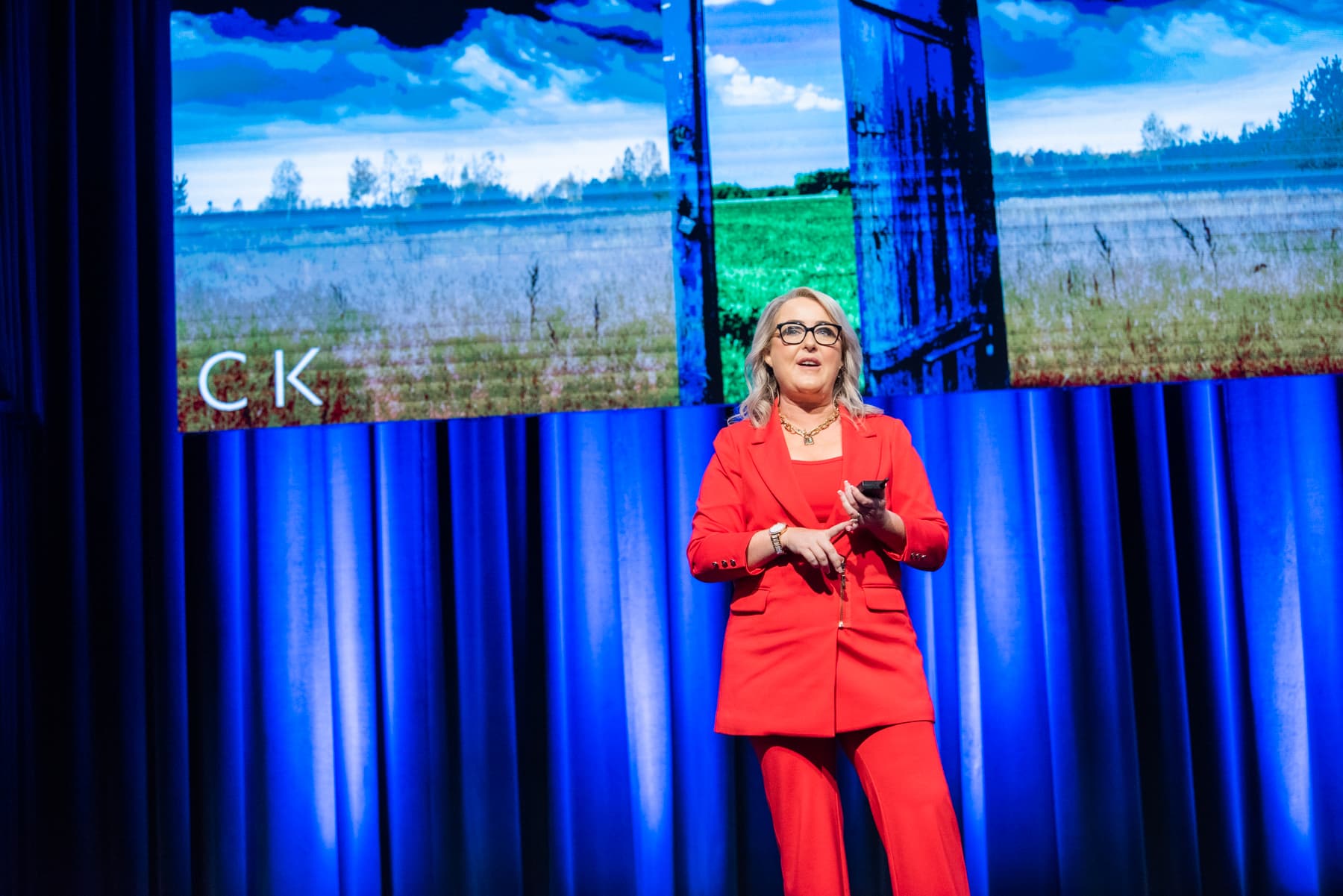
Recently, I delivered an AI keynote for tourism and hospitality operators through Destination Central Victoria, exploring what AI could mean for how they operate, get discovered and serve customers. Last week, I delivered a keynote and practical AI session for the leaders at 1834 Hotels, where Microsoft Copilot had already been introduced and they wanted to explore what else was possible.
Very different businesses. But I kept coming back to the same thought.
Are we still thinking too small about AI.
Not because businesses aren’t moving quickly enough. Quite the opposite. I think we’re only beginning to see where the real opportunity sits.
We started with productivity. That makes sense.
Most of us first encountered generative AI as something we could ask to do things.
- Write this.
- Summarise that.
- Give me some ideas.
- Analyse this spreadsheet.
- Make this email sound less annoyed than I actually am.
Useful. And the productivity gains are real.
Deloitte’s 2026 State of AI in the Enterprise found that 61% of Australian organisations surveyed were already reporting improved efficiency from AI. But here’s the number I find more interesting. Only 30% said they were using AI to deeply transform how their businesses work.
PWC found something similar. Only 7% of Australian enterprises it surveyed had redesigned workflows to incorporate AI, compared with 56% of leading AI organisations. And those organisations with stronger AI capability were generating combined revenue and efficiency gains 7.2 times higher than their peers.
That’s not evidence that Australian businesses are getting AI wrong. I think it tells us how much opportunity is still sitting on the table.
Because there’s a big difference between:
How can AI help me do this faster?
and:
Why are we still doing it this way at all?
That second question interests me much more.
I saw this with the tourism operators
When I worked with Destination Central Victoria and all of the operators in the region, I described three shifts I think businesses need to pay attention to.
- AI as a Work Assistant.
- AI as a Discovery Layer.
- And increasingly, AI as an Action Layer.
Most businesses are familiar with the first one. ChatGPT, Copilot or another tool helps someone write, research, analyse, plan or organise. But the other two potentially change the business more profoundly. AI is changing how customers discover businesses.
A traveller doesn’t necessarily need to Google “best accommodation Bendigo”, open six tabs, read three review sites and eventually forget why they picked up their phone in the first place.
They can ask an AI system:
I’m spending three days in Central Victoria with two teenagers. Where should we stay and what should we do?
Now your business is either part of that answer or it isn’t.
And increasingly, AI won’t just recommend what someone should do next. It will be able to take actions for them.
That’s when this gets really interesting.
The question I kept asking was simple
- Where is the biggest constraint in your business?
- Where are people losing time?
- What keeps interrupting them?
- Where are customers waiting?
- Where are bookings being lost?
- What useful information are you collecting but not really learning from?
What does someone have to do repeatedly that probably shouldn’t require quite so much human effort anymore? Then ask whether AI could help. That sounds obvious, but it changes the conversation. Instead of starting with ChatGPT and desperately searching for something clever to do with it, you start with the business. At Destination Central Victoria, that took us into guest enquiries, review analysis, marketing, meetings and administration, hiring and rostering.
None of those sounds particularly futuristic. That’s the point. You don’t need to begin by transforming the entire company. Sometimes you begin with the thing that annoys everybody every Tuesday afternoon. One idea from that work has really stayed with me.
AI belongs backstage. The front of house is sacred. I love that. And I think it applies well beyond hospitality. We seem to spend an extraordinary amount of time debating what AI can replace. I’m increasingly interested in what AI can give back.
If AI handles repetitive guest enquiries, what does the employee do with that time? Hopefully, spend more of it with guests.
If AI gathers information before an executive meeting, what does the executive do with that time? Hopefully, think.
If it prepares account information before a salesperson meets a customer, perhaps the salesperson can spend less time preparing and more time actually understanding the customer.
The question isn’t simply:
What can we automate?
It’s also:
What human capacity could we create, and what would we do with it?
Then the conversation moved another step.
When I worked with 1834 Hotels, Microsoft Copilot had already been introduced.
So rather than spending all our time on how to write a better prompt, we could explore what happens next.
One question I used was:
What recurring management decision would improve if the right information arrived before you had to go looking for it?
Think about a hotel General Manager preparing for tomorrow.
The information they need might be scattered across meetings, operating reports, financial information, correspondence, guest feedback and previous decisions.
Traditionally, somebody has to remember where everything is, find it, read it, connect the dots and work out what matters.
What happens when AI can do more of that preparation?
- Bring together approved information.
- Identify what’s changed.
- Surface unresolved matters.
- Prepare what requires attention.
- Then let the manager interrogate it and decide.
That’s not simply doing the same work faster. We’ve changed where the human effort goes.
And agents take this further again.
This is the part I think many businesses are only beginning to appreciate. Instead of me remembering every morning to ask Copilot to prepare something, why can’t I give it the job once?
- Review these sources.
- Look for these things.
- Tell me what’s changed.
- Flag what needs my attention.
- Have it ready for me in the morning.
Suddenly we aren’t really talking about prompting anymore. We’re talking about changing how work happens. A daily management briefing could arrive before the working day.
Competitor changes could be reviewed every week.
Outstanding commitments could be surfaced before a management meeting.
The technology starts moving from something an individual occasionally opens into part of the operating rhythm of the business.
There is a boundary, though.
The more AI can do, the more important I think it becomes to decide what it should do.
One principle I used with 1834 was:
Schedule preparation, not judgement.
AI can find information, analyse it, identify anomalies, prepare options and surface a decision. That doesn’t mean it understands every piece of context around that decision. And it certainly doesn’t mean accountability has somehow migrated into Microsoft Copilot.
- The manager still questions.
- Verifies.
- Decides.
Technology prepares. People judge. Leaders remain accountable.
That balance is going to matter enormously.
EY’s 2026 Australian CEO research found 44% of CEOs surveyed ranked large-scale reskilling and upskilling among their top workforce priorities, while 41% prioritised redesigning roles to combine human and AI capabilities. That’s the conversation I think we should be having. Not just, which jobs disappear? But, how does the job change?
Which brings me back to business performance.
Deloitte reports that 69% of Australian organisations surveyed are already using autonomous AI agents.
PwC found 74% of realised financial returns from AI investment were being captured by just 20% of companies.
So I don’t think “we use AI” will remain a particularly interesting statement for very long. Eventually, it might be a bit like proudly announcing that everyone in the company has email.
The more useful questions are:
- Where is AI creating capacity?
- Where is it improving decisions?
- Where is organisational knowledge becoming easier to access?
- Where are we seeing something earlier than we would have before?
- Which workflows no longer make sense?
- Where is it improving revenue, margin, customer experience, risk or quality?
- And what are our people doing with the capacity it gives back?
Those are much harder questions. They’re also considerably more valuable.
What I’m seeing makes me optimistic.
I’ve spent much of my career transforming businesses through periods of disruption and technological change. What interests me about AI isn’t simply what the technology can do. It’s what businesses can now do differently because the technology exists.
It's also why much of my keynote speaking now sits at the intersection of AI, leadership and business transformation. I'm less interested in talking about AI as a technology story than in helping leaders understand what it changes about how businesses operate, how decisions get made and where people create value.
I don’t think the organisations that create the greatest advantage will necessarily be those with the most AI.
They’ll be the ones that get very good at identifying where it creates value, redesigning the right work, building capability in their people and keeping human judgement where it matters.
For one business, that might start with a guest enquiry that no longer interrupts service.
For another, it might be an agent preparing tomorrow’s management briefing before anyone arrives at work.
Neither sounds like science fiction.
But that may be exactly where the opportunity is.
Transformation rarely begins with transforming everything. It begins when someone notices that something no longer needs to be done the way it always has been.
About Caroline Kennedy
Caroline Kennedy is an award-winning former CEO, CEO advisor and AI keynote speaker who has led multinational businesses with up to $250 million in annual revenue. She works with CEOs, executive teams and established businesses on AI adoption, business transformation, leadership and organisational performance, helping leaders turn emerging technology into practical business value.
Caroline speaks to executive teams and conference audiences about AI, leadership and business transformation. Find out more about Caroline Kennedy as an AI keynote speaker
Sources:
https://www.deloitte.com/au/en/issues/generative-ai/state-of-ai-in-enterprise.html?