
Ep 10. Mia Klitsas: Fearless Disruption Against Global Business Giants
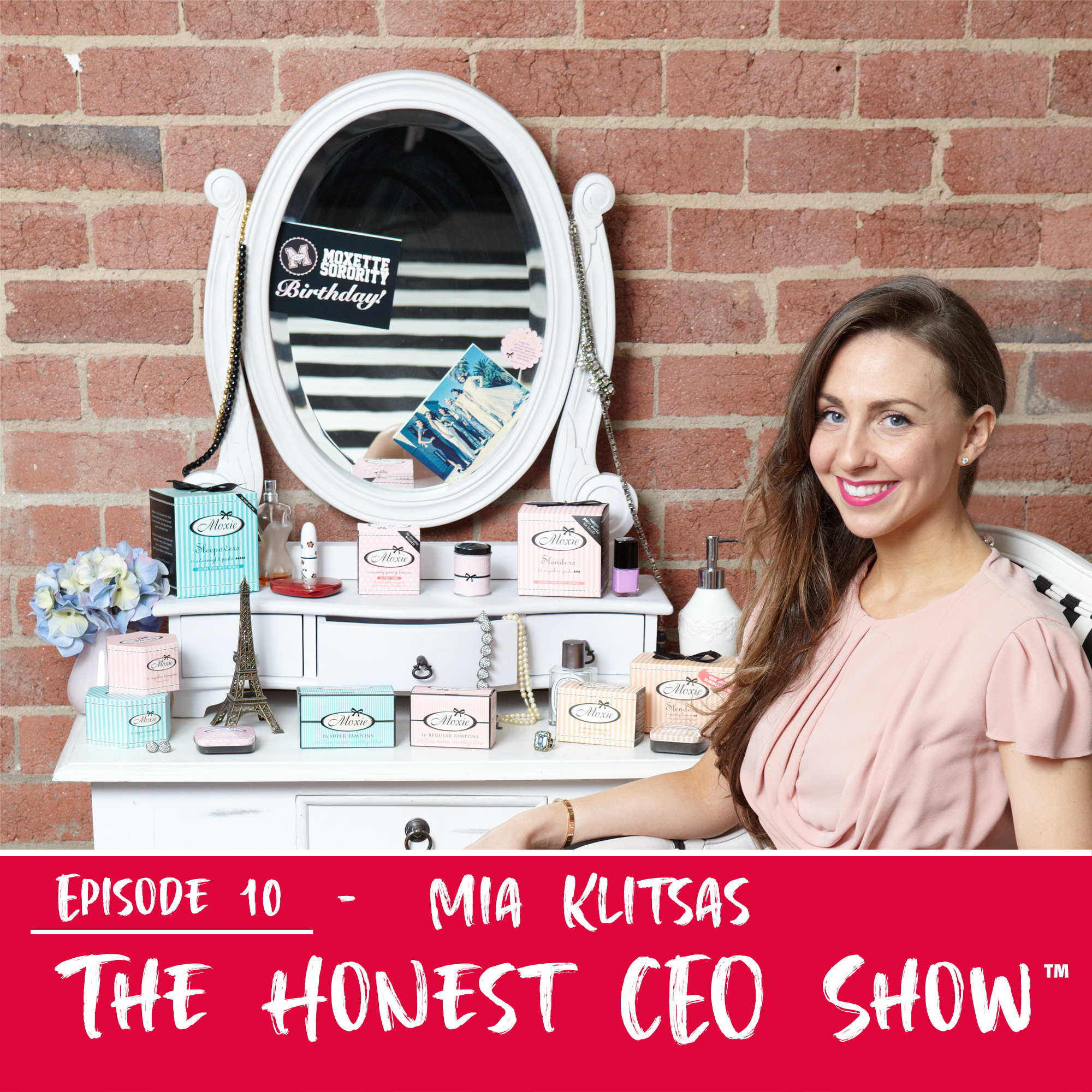
Ep 10. Mia Klitsas: Fearless Disruption Against Global Business Giants
My guest today Mia Klitsas founder and CEO of Millie & More who produce the brand Moxie. Her “moxie” brand are a familiar sight at Woolworths, Coles & Chemist Warehouse.
Mia is a Melbourne-based entrepreneur with a passion for social entrepreneurship and women’s rights. Her “moxie” brand of women’s personal care products are a familiar sight at Woolworths, Coles, Chemist Warehouse and other major retailers locally, internationally and also online.
While studying a Bachelor of Business at RMIT, Mia and her business partner identified a gap in the women's personal care market. For a range of products that were not only high quality but also stylish, feminine and conveniently packaged. At the tender age of 21, she started her business, Millie & More, in mid-2005 and launched Moxie personal care products just six months later in 2006.
In October 2014, Mia was named Telstra Young Businesswoman of the Year for Victoria. And was listed as one of AFR and Westpac’s 100 Women of Influence’. Mia is an active member and board member of the global organisation 'Entrepreneur's Organisation‘. She is proud to be the key-note speaker at this year’s International Day of the Girl forum, run by Plan Australia. She also mentors students and speaks regularly at business groups, events and schools. Sharing her experiences, challenges and successes in managing a growing business and brand.
In this episode we delve into:
- How Millie & More started.
- How Mia come up with the idea of a tin box
- The hardest part of the initial start-up
- How Mia has grown the business
- What the top priorities were for building the business
- When Mia developed Moxie, she took on the big global multinationals – we talk about if she feared failure
- The biggest lesson Mia learnt in business
- Winning the 2014 Telstra Victorian Young Business Women’s Award
- Mia shares her career advice for other young women
- Mia shares her advice for anyone struggling in business
- Mia launched ‘Pads for Pads, in 2013, we talk about the iniatitive
- What the future looks like for Mia and the business
Mia Klitsas from Moxie is an amazing young woman. She has huge achieved success in business. She is an inspiration. Mia is a mentor for students and speaks at business groups, events and schools. Sharing her experiences, challenges and successes in running a growing business and brand.
Episode Transcript
The Honest CEO Show, Episode 10: Fearless Disruption Against Global Business Giants, with Mia Klitsas
Caroline Kennedy (00:20)
My guest today Mia Klitsas founder and CEO of Millie & More who produce the brand Moxie. Her “moxie” brand are a familiar sight at Woolworths, Coles & Chemist Warehouse.
Mia is a Melbourne-based entrepreneur with a passion for social entrepreneurship and women’s rights. Her “moxie” brand of women’s personal care products are a familiar sight at Woolworths, Coles, Chemist Warehouse and other major retailers locally, internationally and also online.
While studying a Bachelor of Business at RMIT, Mia and her business partner identified a gap in the women's personal care market. For a range of products that were not only high quality but also stylish, feminine and conveniently packaged. At the tender age of 21, she started her business, Millie & More, in mid-2005 and launched Moxie personal care products just six months later in 2006.
In October 2014, was named Telstra Young Businesswoman of the Year for Victoria and was listed as one of AFR and Westpac's 100 Women of Influence. Mia is an active member and board member of the global organisation Entrepreneurs' Organisation and is proud to be a keynote speaker at this year's International Day of the Girl Forum, run by Plan Australia. She also mentors students and speaks regularly at business groups, events and schools, sharing her experience, challenges, successes in running and growing a business and brand.
Congratulations, Mia, on all of your achievements to date.
Mia Klitsas (02:08)
Thank you so much.
Caroline Kennedy (02:10)
So tell us, where did it all begin?
Mia Klitsas (02:14)
What feels like it started long time ago now and it was about 11 years ago now. I was studying a Bachelor of Business Marketing and I was also working full-time doing an internship in marketing working in new product development. And at the time I was looking at new packaging ideas and developing new brands and just had one of those crazy off the cuff.
One of those off the cuff ideas I think is we often do and it was actually quite a funny story. I was sitting at a Nando's outlet having lunch with my now business partner and we were talking about work and new packaging ideas and somehow feminine Hygiene came up and we were talking about how tampon products are so poorly packaged and how I was sharing those horror stories that every woman seems to have about boxes breaking open in your bag and whatnot.
We thought it's surprising that they don't have something a bit more robust if that's the case. So what started off as I said and off the cuff idea and off the cuff comment actually but we'll just take the project. They don't come eventually, well not even eventually, six months later really turned into a business. The more we thought about it, the more I realised that it actually is something that women have struggled with and I was surprised that no one had sort of taken a more practical approach to the category. So I saw an opportunity and went for it. I was very young and that's quite naive and a little fearless as well dove straight in.
Caroline Kennedy (04:07)
And I think that what you've just said there about being young and fearless and naive, you know, sometimes they can being young and in that, that where you don't fear the future or you don't necessarily, you know, you haven't developed that yet. It can really empower you to just push through and, and not even think about whether there would be any consequences if it didn't work.
Mia Klitsas (04:40)
That's so true. absolutely.
Caroline Kennedy (04:43)
And clearly you identified a gap in the market and you were solving a problem. And generally that's the key to success is if you can solve your customer's problem and be customer centric, then the customer wants what you're delivering for them. So in regards to the tin and the box, how did you come up with that idea?
Mia Klitsas (05:13)
The tin was actually the first idea. So when we were first talking about it, it was like, what if they came in something a bit more robust that didn't break open in your bag? my gosh, what about like a tin? They should come in a tin. It literally was kind of an off the cuff comment. And then I thought, well, tin is actually a good solution. Tin is crush proof, well, crush proof completely, but that could be a really in this context, it would be pretty difficult to break open in your bag. Yeah. 100 % recyclable.
It's one of the most recyclable materials and it's also reusable. So it seemed like a really good option particularly for what I was looking at and very, very fit for purpose. So that was kind of the idea itself was putting tampons in tins so they wouldn't roll around in our bags and then the rest just snowballed from there. I thought that tin itself being, I guess, naturally sort of silver in color can be a bit harsh and a bit masculine looking and I wanted something feminine and something a little more timeless and a little less offensive and not too gaudy or loud. So I always, at the time, pastels were really coming in and I liked the idea of this kind of retro look that wasn't really trend driven.
And so it's a little bit of a nod to the 1940s and 50s got a little bit of a boudoir lingerie sort of feel about it with candy stripes and the bows and it was just a completely unique approach to what was out at the market at the time. At the time we were seeing a lot of 70s retro prints very, very loud bright colored packaging that often changed every few months and as a customer I even found it really difficult to identify which product to on shelf. The idea was to create a range that was aesthetically it looked really nice, it was functional but also it was very easy to shop and easy to identify at the point of purchase because I say this is in a category that we really enjoy shopping.
We don't like to spend too much time in the eye. So let's just make it as easy as possible and as fast free and part of that was the pack design and having a clearly can see color-coded range of absorbancy. So you're diving through the island, you just want to grab. It's an easy process. You don't have to spend time trying to work out which product you bought last month. So I really thought about it from start to finish and I really am a consumer. I buy these products and I very much thought about my experience and my girlfriend's experience and ultimately designed something in aid.
Caroline Kennedy (08:22)
And I think that that's pretty evident and you're right. You know, when, when you go to the aisle to purchase those products, if, if, if this consistency, then it's so much easier and you don't really want to have to think about those things. just want to purchase and move on and do what else you have to get on with, you know, rather than look and think, which one do I need? So it doesn't need to be complex.
Mia Klitsas (08:52)
Absolutely not. Everyone's time pooled over, everyone's got better things to do. You don't want to spend your time in the feminine hygiene aisle at the supermarket.
Caroline Kennedy (09:00)
Right. What was the hardest part of the initial startup?
Mia Klitsas (09:05)
Look, as you said earlier, I think it was an interesting time for me because I was very young and you're right, I hadn't developed that fear of failure yet. I don't think. I developed it but I was very much pushing it aside.
Caroline Kennedy (09:19)
Well, that's what you need to do though, don't you?
Mia Klitsas (09:22)
In hindsight, yeah, in hindsight that was a very, very good thing I think. Perhaps had I known what I was in for it might have scared me off a bit more but I was just raring to go. So I guess I didn't know what I didn't know. So anything I came across that was new for me was just a learning and all part of the process. I'd say probably the thing that has been the most challenging for me is probably managing cash flow and finances and things like that.
It's never been a strong point for me. I'm more of a creative mind than a mathematical mind. So I always found doing budgets and things was tricky when all I wanted to do was packaging and all the fun stuff or what I consider the fun stuff. So I think Cashflow kind of creeps up on you. Something they really didn't call. That was an interesting discovery for me.
Caroline Kennedy (10:23)
The key to that is as well Mia is that cash is king in a business and if you cashflow wrong, regardless of the fantastic product you have, your business can quickly disintegrate.
Mia Klitsas (10:38)
Absolutely, you're right, cash is king. It's critical. It's just absolutely mission critical and it is difficult. It is really tough to get right and I see it in a lot of businesses. Really successful businesses will have cash flow issues so it's not easy. It's definitely not easy.
Caroline Kennedy (10:58)
No, but clearly you've mastered it somewhat.
Mia Klitsas (11:02)
I don't know if I'm quite master of it yet but I've found people that are masters of it. It definitely helps. Yeah, it definitely helps. If you're not good at something then find someone else that is.
Caroline Kennedy (11:08)
That helped. And how have you grown the business?
Mia Klitsas (11:19)
More recently, we've just gone online. So we've launched an online subscription service called Moxie Box Club which is sort of a set and forget service. So once again, just really thinking about convenience and this is the one product that we have to buy every month. So we figured, well, why don't we deliver it straight to your door and then you can totally forget about ever having to go and buy it again.
Caroline Kennedy (11:45)
And when I read that, thought, amazing, why didn't somebody come up with that earlier?
Mia Klitsas (11:53)
Yeah, know. Well, there are a few of them around the world but it doesn't seem like there's one that's customisable. So Moxie Box Club allows you to choose exactly which products want delivered and exactly when you want them delivered. So understand that of course every woman is different and everyone's flow is different and so the Box Club caters to that. So that's really exciting for us. It's something new.
Mia Klitsas (12:22)
We still have got a really solid bricks and mortar business and we're still growing with our retail partners which is fantastic. And we're also exporting a lot too to various markets quite well in Asia at the moment which is exciting. So yeah there's sort of lots of things.
Caroline Kennedy (12:44)
And I suppose when you're growing a business as well, or as it grows, you don't want it to become static. So you do need to look at other source markets or revenue streams.
Mia Klitsas (12:57)
Yeah, mean unfortunately comparatively to other markets in the world, Australia is quite small and we don't have as many retail partners here. So it can be very difficult. So guess in order to insulate ourselves, our economy is important. So we're giving it a go. It is difficult. It's very, very difficult. But we're doing our best. We'll see how we go.
Caroline Kennedy (13:25)
And initially, because getting into these major retailers is quite challenging. So, I mean, you appear to have made it very seamless, but I'm sure it wasn't. I'm sure there was a lot of hard work that went on behind the scenes.
Mia Klitsas (13:41)
There was. I think we were fortunate in that we got our first break with Woolworths and look, they've just been so wonderful to deal with over the years. And I think the very first buy that we presented to, we had a truly unique offering.
I guess , I took a chance on us and ranged us in all stores pretty much immediately. So that was a pretty big win for us. Our first retailer was Woolworths. The rest kind of just snowballed from there and I think we're very fortunate because I think once one major has the range then the others kind of need a bit of that too. But it still is very, very difficult and we still face range reviews every year where we have to go in and fight for shelf space and whatnot and it's not easy but and speaks for itself.
Caroline Kennedy (14:43)
And clearly there's demand there and you know, the brand is a very strong brand.
Mia Klitsas (14:50)
Yeah, we've worked really hard on developing the brand and 10 years in I think now I've really started to realise the importance of that. I'm actually really proud of that because it's something I was so passionate about doing from early on and a lot of people said, oh, don't be silly. Anyone could copy anything if they want to. I was hell bent on just developing this brand. This personality that couldn't be replicated. I'm pleased to see Moxie being in the market and other massive multinational brands and I think it's credible now. It definitely has its place. We've got a really good customer base and a loyal following and yeah, I just think it sort of started that one day with that off the cuff idea at Nando's. Pretty insane.
Caroline Kennedy (15:48)
You know what, with your comment before about the brand, it's brand is so important because if people and consumers and your loyal customers can really associate with your brand and that's a feeling, you know, because you can't replicate that. You can replicate a product, but you can't replicate an association or a feeling towards a brand. And that's the point of differences like Coca-Cola and Pepsi. mean, you know, Pepsi trying to replicate Coca-Cola and vice versa. It just wouldn't happen. They're different associations and they've got different followings, you know.
Mia Klitsas (16:27)
Yeah and people tried, people have certainly tried but I think if you remain true to the brand and it's true to its values then I think that stands out and customers know when they're being marketed too, they know a fake is a fake so to speak. So I think you've just got to trust in that a little bit too.
Caroline Kennedy (16:49)
I agree. Now, what were your top priorities for you when growing the business in terms of the actions you took to ensure the business continued to grow and develop?
Mia Klitsas (17:00)
I have to say that probably the biggest one is just ensuring that we have the right resources in place to help foster that growth along the way. Particularly cash flow and manpower I'd say. But guess whilst of course ensuring that we're remaining true to the values and beliefs of the business. we never stray from those. That's what helps keep us on track. But I think resourcing is really, really important. You can't be underestimated. You really sort of have to plan ahead for that.
Caroline Kennedy (17:36)
Yeah. And particularly when you look for growth, mean, resources are key to that because when you're doing like strategic plans, for instance, and you say we want to achieve X, Y and Z in the next 12 months or your five year plan, whatever that may be, you really have to plan how are we going to get there and who's going to help us do that.
Mia Klitsas (17:57)
Why not, yeah. Yes, exactly. It's the who. It's not only the how, it's the who. And I think early on I was guilty of perhaps not addressing that as well as I could have and learnt the hard way. But you do often have to think about who. It's one thing to have the idea and execute it but who is a huge part of that. Do you have the resources and the manpower to do it?
Caroline Kennedy (18:24)
Yeah. And I talk a lot about in business in particular, the importance of the people within your business. And that's the who, but you know, being customer centric, a, because at the end of the day, you don't have a business without customers, but also your team and the culture you foster within your team and the spirit and the fact that when they are aligned with your values and, you get the right cultural fit your team members just really buy into making sure that the business is a success because then they're a success.
Mia Klitsas (19:00)
Absolutely, it's all about your team. think you're nothing without your team and I really believe that culture is so important for us and it's something that I've really focused on because without your people, you don't have a business. Just as important as your customers.
Caroline Kennedy (19:22)
Yeah. Now when you develop Moxie, you know, you were taking on the big global multinationals. Did you fear failing at that point?
Mia Klitsas (19:34)
Wow, I'm trying to put myself in my 21, 22 year old shoes. Look, as I said earlier, think to be if I'm really honest with myself, I don't think I really did. I don't think I developed that fear yet but actually very thankful for that. I think as you said earlier, I just didn't know any better at that point. I'd always been taught to give things a go. I feel like I very much adopted that philosophy when I started the business. I've always been the sort of person that would much rather try something and fail forever ask myself, what if I'd done that? I'm just not that sort of person. I'm too curious. I always just want to know and I'm impatient. Look, I was young and quite naive and in hindsight that was just a really good thing. I think with being naive came that fearlessness.
Caroline Kennedy (20:34)
I agree with you. And even as we get older, I think, and I talk to a lot of business owners and we talk about the fear of failure and that also can really drive success as well because it pushes you to, not going to let, you know, I'm not going to let that fear of failure stop me. I'm going to really push through it just bring it along with you as well.
Mia Klitsas (20:54)
in a way, yes.
Caroline Kennedy (21:00)
And I think that that's really important to recognise and talk about and educate about as well, that it's okay to fear failure. Exactly. So am I.
Mia Klitsas (21:08)
I've failed a lot. I still do. Every day I make mistakes but to me it's just mind-boggling.
Caroline Kennedy (21:25)
Yeah. And also, you know, the learnings that come from that can be invaluable too. know that from my personal experience where I have failed or where I've made mistakes, the learnings are so invaluable. just, I wouldn't, I don't regret any of it because of that.
Mia Klitsas (21:45)
You think, I'm not going to do that again. Yeah. That's a idea. As they say, you live and learn. You often don't know otherwise.
Caroline Kennedy (21:47)
Absolutely. Yeah. And I love the saying you used earlier, you don't know what you don't know. And I've always used that in life because it's so true. And I love finding the unknown as well.
Mia Klitsas (22:04)
It's so exciting. People often ask me, how do you stay motivated in business? And I'm like, every day there is something new that comes my way that will challenge me every day. I think you never stop learning. You really don't.
Caroline Kennedy (22:23)
And if you do, then there's something wrong.
Mia Klitsas (22:28)
People often ask, will you sell your business? When do you want out and that sort of thing and I think, I feel like still being challenged and I'm still learning so much and I still feel like I've got a lot to give. So I think the day that I feel like I'm not being challenged or the day I feel like I've stopped learning is the day I need to. And I hope that's really a lot.
Caroline Kennedy (22:52)
I actually think it will be because you are so aligned with your business and yeah, you don't get the sense that it's a chore for you or you know, you're really passionate about it.
Mia Klitsas (23:06)
No, it's not work. Technically it is, but it really doesn't feel like work.
Caroline Kennedy (23:11)
Then you don't work a day in your life if you feel like. Now we talked about lessons before. What are the biggest lessons you've learned in business?
Mia Klitsas (23:26)
Wow, gosh, just being in business itself is such a huge lesson in itself and the learnings that come with that. Business is really challenging. I've had some really, really tough times over the years and there have been times where I think, should I just cut my losses, pack it in? But I think those times are important.
Mia Klitsas (23:52)
It's important to have as I said, it's important to fail sometimes because it does remind you that you're pushing your boundaries and you're constantly. I mean, how can we grow if we don't challenge our boundaries? So I find that can be difficult to embrace sometimes. It feels like everything is just against you but for me, really keeps pushing on and it keeps me. It reminds me to take rest.
Mia Klitsas (24:25)
The second thing is probably cash flow. I'd have to say again cash flow, the bane of my existence. It is really difficult to manage but as I said it seems like everyone in business offers the same fate regardless of industry. I'd say to everybody starting a business be prepared for that as best you can be. And again, you don't know what you know, you never stop learning and particularly in today's market which is forever changing and technology is evolving so rapidly. I think it's important to be open and open to embracing change because I think otherwise it's quite easy to get left behind. So you need to keep up.
Caroline Kennedy (25:08)
Yeah, and to remain relevant as well.
Mia Klitsas (25:10)
It's all about relevance, yeah, definitely.
Caroline Kennedy (25:13)
And to be open to embrace the change and ask your customers, know, what do we do well? What can we do better? What would you like to see us doing? Cause at the end of the day, if you're not delivering on your consumer expectations or your customers expectations, then you're not remaining relevant.
Mia Klitsas (25:32)
Absolutely, I've learned that. It's so important to manage. Manage or exceed customer expectations. As you said, they'll tell you what you're doing right off.
Mia Klitsas (25:44)
Some people just, I find sometimes businesses or products just assume that they know what their customers want and they will develop something accordingly but you really do listen to your customers. They might not be wanting what you're selling.
Caroline Kennedy (26:00)
Yeah, and it's that ongoing improvement as well because as the market evolves and changes, so do consumer expectations.
Mia Klitsas (26:09)
Needs and change too. People's lives change and lifestyles change. I mean look now, everybody is always on their mobile phone. We're interacting in different ways and you just need to embrace it really.
Caroline Kennedy (26:26)
Yeah. And a prime example of that, I think is, you know, the introduction of your, you know, your box and going online because it's, if people want convenience and they don't really want to leave their houses if they don't have to, you know, so yeah. And I think that's a prime example of remaining relevant and keep evolving to meet the demands of the changing market. Yeah.
Now you were the 2014 Telstra Victorian Young Businesswoman of the Year. What was that experience like for you?
Mia Klitsas (27:04)
So surprised and overwhelmed when I won that award. just, you know, I... It's honor for me to even have been nominated, let alone be named the winner and particularly amongst so many other young women, young amazing women, whom I really admire. It it floored me honestly when I called out my name. In the past, I really shied away from any such recognition and I'd actually been nominated quite a few years earlier and I never went through with the application process because I was a bit of a doubter, a bit of a self-doubter and I kind of just prefer to lay low, do my thing.
Yeah, I don't know. I think just as I've got an older and I've started to understand more about life and business, I've also started to understand the impact of positive influence and for me being part of the award, it gave me a platform to have a voice. That's an incredibly privileged position and so I think embracing proud of that way is important. Just in order to show other women who perhaps showing away from achieving their goals for whatever reason. That you're awesome and that you're worthy and that you can do it too. So I kind of think like how can we drive change in the world and expect others to raise their voices if we won't raise ours.
So it really taught me lot about that and it's an incredible journey. I've made lifelong friendships, I've developed incredible business relationships and it was just It was just a really great moment and it just sort of continues to be great. Yeah, it's, you know, all good things have come from it. So I'm just, I'm just, yeah, really, really so to have been involved, not only to win it, mean, gosh. Yeah, it's still surprising me. walked past, I walked past the award every morning at work and I just go, yeah, that happened.
Caroline Kennedy (29:24)
You're very modest.
Mia Klitsas (29:26)
No, it's the truth. But look, I really do appreciate it and I really do appreciate the recognition. means a lot. So I like that I have those little moments with myself every morning where I just... That happened. That's pretty awesome.
Caroline Kennedy (29:45)
And I think being a positive influence on the next generation of women as well, and women in general, the fact that you recognised that, that, that, you know, that you wanted to move away from, I suppose, not wanting to embrace the recognition. And a lot of women suffer from imposter syndrome, which, you know, limits people too. And it can be, I'm not good enough, I'm not this, or they're going to find me out. And it's more women that have it. women that do have those feelings are actually generally overachievers because they really want to do well and they care about doing well.
And that's what I hear from you. even the, and it's not necessarily self-promotion, but when somebody promotes you and recognises you, you're very humble about it. And that's a really great quality. But to embrace that and feel slightly uncomfortable about it, to really have an impact on other women is such a great quality. And you should be very proud of that.
Mia Klitsas (31:03)
That's so lovely. Thank you. That's really lovely. I mean it look at his heart. I do find it challenging. I kind of do often prefer to lend low sometime. Yeah, as I said at the same time, I've seen the impact that this is even just the women around me and I think, my gosh, that's so powerful. I'm really lucky. I'm really, really lucky to be able to deliver that or to help drive that. So it becomes bigger than you and more important than your fear of being in the spotlight. Not that it's that dramatic but you know what I mean. It's more than that and it's more important than that. So look, I've used the opportunity to go and speak at schools a lot.
So I go and speak to young girls about their careers and about career paths and just what it's like, what it was like when I first started being a young woman in business talk a little bit about social responsibility initiatives and things like that and it's just amazing that the Telstra Awards have sort of given me that platform to be able to talk about things I care about and hopefully instill some of those values and that drive to make change.
They're going to be our future Telstra business women and future leaders. So I think it's important to pass on that positive message.
Caroline Kennedy (32:43)
Yep. And be a positive role model for them as well to demonstrate that it is possible and that if you, you know, if you're game enough and you have a really great idea, just embrace it and see where it takes you.
Mia Klitsas (32:56)
You don't want to ask yourself what do you.
Caroline Kennedy (32:58)
Yeah, absolutely. I completely agree. Now, what career advice would you give to young women?
Mia Klitsas (33:08)
Look, I think there are going to be people that tell you you can't do it, that you're too young or you're too old or you're too inexperienced. There are always people trying to bring you down unfortunately and I just have to ditch the haters. So I said ditch the haters. You don't need those people. Find people that will have your back. Keep them quiet, just develop a good network and they're the people that you call on. They'll call on you too. It's a really beautiful relationship to have.
Sometimes it's important to block out the negative talk because there's a lot of it. I found that there were more people that told me that I was crazy and that it was a bad idea than people that supported me at the time. And you've got to fight through that sometimes if you really believe in your idea and why shouldn't you? You've just got to go with your gut. Cliche does that sound? Go with your gut.
Caroline Kennedy (34:17)
It's one of those things, it's better to have tried and failed than never have tried at all.
Mia Klitsas (34:22)
As I said, never wanted to be asking myself, what if, what what if. I didn't want to be sitting here, loading you down the track, saying, what if I had done that? Like really, what have you got to lose? And that's I thought to myself. What's the worst that could happen? Like really, what's the worst that could happen? It really seemed that bad, so I went for it.
Caroline Kennedy (34:44)
And it's always, you know, in life, things do happen and, things crop up, but you get through them and, know, and at the time they might seem like they're quite, know, catastrophic, you'd get through them. And once you get through them and you look back and you think, why was I so worried?
Mia Klitsas (35:08)
Exactly and look it wasn't meant to be easy if it was easy then everyone would do it And and I think it's important to to remember that You can't do everything yourself. There are people there to help you You don't have to have all the answers all the time. You can't be everything to everyone all the time So, you know I found as I said earlier if you're not Something or you're struggling struggling with something then there are people that assist.
And there are people that are really willing to assist as well. It's just about finding those right people but they're out there and once you do find them, they're so valuable.
Caroline Kennedy (35:51)
I've always had a motto of, um, surround myself with people that lift me higher or people that if I'm in a room with them and I look at them and I think, Oh, I shouldn't be here. am I here? Yeah. I feel intimidated. Then I know I'm in the right place because, you know, yeah. And that's so true for anyone. Um, now you launched the initiative pads for pads in 2013. Tell us about that.
Mia Klitsas (36:20)
Yeah, well we developed Pads for Pads in order to help curb the really high rates of school absenteeism amongst girls particularly in developing countries due to poor menstrual hygiene management. So it actually started when I read an online article that talked about this issue and it just, my gosh, it just hit me because I'd been in the industry for at the time about seven or eight years.
There was very little talk about menstrual hygiene in developing countries and what solutions women are using in remote areas and this article was so eye-opening. I just couldn't believe that A, I hadn't really thought about it before and B, what was going on. So girls are often forced to use old rags, newspapers, bits of old foam mattress in place of menstrual products because they don't have access to clean and efficient solutions. Obviously those are not solutions. They're very inefficient methods. They lead to infection, embarrassment of course as well and so girls are often forced to stay home.
They don't go to school, they will stay at home for four or five days and ultimately they miss up to 20 % of their entire school year. No, it's not like Australia whereby if you miss class you can ring your friend or ring the teacher and get the note. It's really difficult for these girls to keep up and so a lot of them will end up leaving school altogether and you know that just has such enormous detrimental effects on their future. And so I thought, well, I have to do something, I can't not. I just think with knowledge comes a sense of responsibility. You can't not do something when you hear about something like that. Very long story short, this article talked about an organisation in Uganda called AfriPads and AfriPads make reusable, sustainable menstrual solutions for women in developing countries.
And so I contacted them out of the blue and just realised that through what they were doing as a business over there and what we're doing here that if we partnered together, we could help support more of these young women and help keep them in school. So basically, don't fundraise or anything. We fully fund our own Pads for Pads program. So we use our profits to purchase menstrual kits made by AfriPads who employ 150 local and they make the kit on our behalf and then we donate them to the girls in the most need. So thus far we've supported 12,000 Ugandan schoolgirls. So each girl will get a year supply of product and many of them have already graduated which is fantastic. So it provides a very good comfortable
It's a win-win. It's awesome and it's such a huge problem but the solution comparatively is actually so simple. So I'm just so pleased and I'm so pleased that in such a short space of time we've been able to support so many girls and hopefully many, many more.
Caroline Kennedy (39:52)
Yeah. And you know, working with the partnership with the, organisation you mentioned before, you can have a bigger impact both working together, which I'm sure they've clearly seen. But I also want to make note of, know, the fact that you said you fully fund that from your profit, which is fantastic because we talked about earlier the challenges of cashflow and yet you, you put that aside and you don't consider that, whereas a lot of businesses do. the social impact that you're having and the social responsibility that you feel makes a difference and it really contributes.
Mia Klitsas (40:35)
And it doesn't sound like a lot but you know someone actually asked me once because you know we are still a small business and I think people often this particular person that interviewed me actually, you're only a small business. What impact do you think you're really going to make? And I thought, my gosh, that's such a negative attitude. If we helped one girl, if one girl could continue her schooling and graduate and go on to college or university and forge the career path that she's dreamed of, then that's something.
Caroline Kennedy (41:14)
One more than that, that, than previously had that help.
Mia Klitsas (41:19)
But you know, it's like the butterfly effect, right? It's not just that one girl. So the impact of that one girl being educated in community means that she's probably more likely to educate her children and so on and so on. The effect of educating one girl is enormous. And I kind of feel like if everyone just did their little bit, you don't have to have an enormous impact. You don't have to have a lot of resources. Everyone just found a way whether it's personally or in business, particularly business, we can use our businesses as platforms to drive change for the things that we care about then I think collectively we could actually make an enormous if everyone just did a little. So I'd really encourage people to think about it and look at it and think about an area that's relevant to their business or to their customers and try and give back in some way even if it's just a small way.
Caroline Kennedy (42:20)
And it is so important to give back to the community and not just to take all the time as well. It's a two way street. I think 12,000, helping 12,000 young girls is having an impact and it makes a significant difference. So it's not small and you should be very proud of that.
Mia Klitsas (42:44)
We are really proud. I've been to Uganda and I've met so many of these girls and they're just incredible. They're just amazing and to see them thrive like that and to see their... There's something else.
Caroline Kennedy (43:00)
Yeah, rewarding...
Mia Klitsas (43:04)
I think when we started that initiative it all, everything fell into place for me. I of went, I get it now. I get it. That's what it's all about.
Caroline Kennedy (43:15)
There's more to life, you know, and actually making a contribution is part of that. Now I've heard you talk about your Moxie HQ birthday parties.
Mia Klitsas (43:37)
Moxie HQ birthdays are pretty amazing. I'm not going to lie. They're pretty spectacular. I've had some really great parties and I think the best part perhaps about the parties is just the feeling of how much I must mean to the team for them to value me and to go to so much trouble because they really do got a lot of trouble. One that stands out was I had an Alice in Wonderland.
Mad had his tea party theme one year that was quite amazing and the guys had completely transformed the office and I had to go down the rabbit hole and met Tweedledee and Tweedledum on the way and everyone was in costume and it was pretty incredible. Probably the one standout one was a couple of years back and they called it my friends of Mia party and they'd managed to get every single one of my girlfriends out the office for morning tea that was prepared by my mum. So was really beautiful. Everyone left their jobs and kids and whatever and came to spend the morning with me. It was a really nice surprise. So I feel really, really spoiled. Yeah, they are pretty epic, not going to lie.
Caroline Kennedy (44:56)
Yeah. And I think that that comes back to a, your culture as a credit to you because you clearly look after your team and they're well engaged and they respect what you're doing in the business and respect you as an individual, but also a credit to you as a person because all of your friends took the time out to be there. you know, so.
Mia Klitsas (45:21)
It's really special. I feel really spoiled. I feel very, very spoiled when it happens.
Caroline Kennedy (45:33)
But they do that because obviously clearly you are a special person, I think is what I'm trying to say.
Mia Klitsas (45:42)
I hope that's why they killed.
Caroline Kennedy (45:45)
They wouldn't do it for any other reason I'm sure.
Mia Klitsas (45:51)
I don't know what's in store this year, I'm looking forward to it though. They really up the ante every year, they really up their game so I don't know what they're going to do this
Caroline Kennedy (46:02)
Sounds like fun, we'll have to take some pictures.
Mia Klitsas (46:07)
Welcome, you're more than welcome to join us.
Caroline Kennedy (46:09)
I might just take you up on that. Finally, what does the future look like for you and the business?
Mia Klitsas (46:18)
Well, as I said, I I've got a lot left in me personally and I think there's a lot left in Moxie too. So look, I think we'll continue our international expansion and we'll continue to grow Moxie Box Club and perhaps also diversify the range. So exciting times ahead.
Caroline Kennedy (46:40)
Yes, wonderful. Well thank you so much for your time Mia. I really appreciate it. I love chatting to you and congratulations again on all your achievements and what you contribute to business and also to the universe in general.
Mia Klitsas (46:57)
Thank you so, much.
Don't miss an episode of the The Honest CEO Show by subscribing on iTunes, Spotify and if you love our podcast leave a review.
Your host
Connect with us on twitter
Email us
OVER TO YOU…
What was your biggest take away or ah-ha moment from this episode?
Leave your comment below.
We'll respond to each and every comment.
Share the love!