

Ep. 21 Lorraine Wood, Founder of Australia’s Leading Addiction Centre.
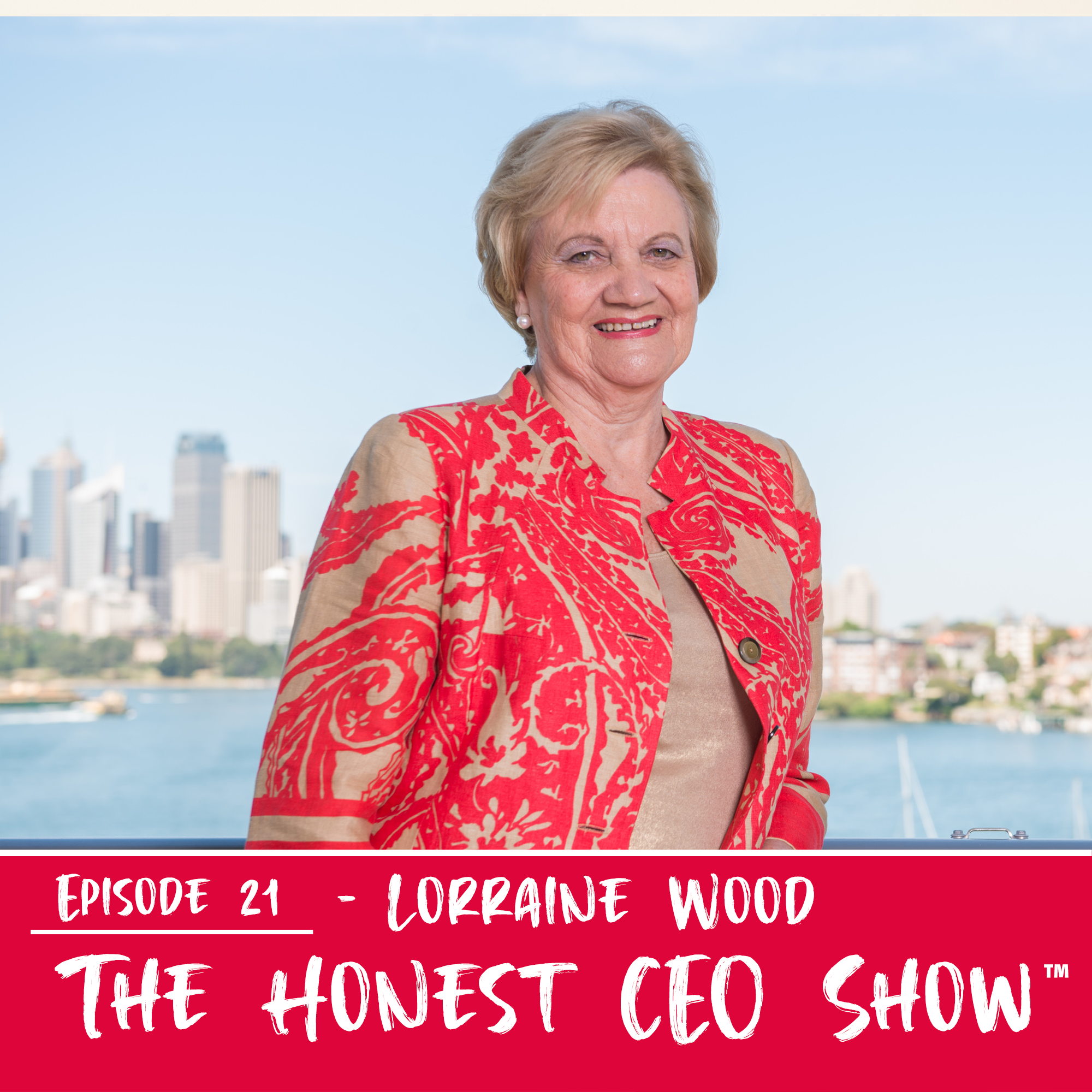
Love & Addiction With Lorraine Wood
This is a very personal interview for me as I grew up in an environment of addiction, and my guest Lorraine founded the Australia’s leading addiction and mental health centre.
Lorraine Wood is the co-founder and owner of South Pacific Private, Australia’s leading addiction and mental health centre, and is also the author of Love & Addiction, a personal memoir of her inspirational life.
From New Zealand farmer to a successful Australian business owner, Lorraine has certainly had an interesting life full of incredible highs and lows with the highlight being her hospital.
South Pacific Private was founded 22 years ago by Bill and Lorraine Wood to offer Australian’s treatment for mental health and addictions which was unparalleled in Australia at that time. Bill had undergone treatment for alcoholism at ‘The Meadows’ in the US and was so inspired by the program, both he and Lorraine founded the hospital in Australia so others could benefit from the treatment program they experienced. Their vision to open the hospital was not a straightforward journey, and they were beset by many challenges that seemed insurmountable. At times, Lorraine and Bill struggled to keep the business afloat (even having to sell their home to keep their vision alive).
Since then South Pacific Private has treated over 7,000 people, and this legacy is due to the passion and commitment of two people who took a personal journey to overcome the difficulties of alcoholism and wanted to provide the same service for the Australian public at a time when it just didn’t exist.
Sadly, in 2000 Bill passed away and yet, in the midst of grief and loss, Lorraine decided to continue to run the business as her passion for saving lives, and healing families burned as strongly as ever.
Over twenty years later, and now in her late seventies, Lorraine is still a familiar face in the corridors, and the patients find inspiration in her story. She still regularly lectures and sometimes still holds group therapy or meetings. Her story unites us all and from it stems the family culture that prevails in the hospital.
In the episode, we cover:
- The difficult journey to overcome alcoholism.
- How it affects families, Lorraine is passion about getting families healthy; her treatments are not just focused on the person with the addiction
- The shame of what people have experienced in being exposed to addiction can have a huge impact on a person – Lorraine shares her advice in dealing with this.
- The stigma attached to depression – Lorraine share her advice on how to seek help.
- Lorraine shares her advice and tip for people suffering from depression and what daily steps they can take to help overcome depression.
- Lorraine share the top 3 challenges she faced in building her business and how did you overcome them?
- Lorraine nearly lost your house while she was building the business. Lorraine shares her turning point.
- Lorraine provides her advice do you have for anyone struggling in business.
Have any questions, email me at [email protected] and I’ll be more than happy to help.
Episode Transcript
The Honest CEO Show, Episode 21: Sonia McDonald, Co-Founder and Owner of South Pacific Private
Caroline Kennedy (00:20)
Welcome everyone. And thanks for listening in, particularly to our regular listeners. I really do appreciate it.
Today my guest is Lorraine Wood. She is a co-founder and owner of South Pacific Private, Australia's leading addiction and mental health centre and is also the author of Love an Addict, a personal memoir of her inspirational life.
From New Zealand farmer to a successful Australian business owner, Lorraine has certainly had an interesting life full of incredible highs and lows with the highlight being her hospital. South Pacific Private was founded 22 years ago by Bill and Lorraine Wood to offer Australia's treatment for mental health and addiction, which was unparalleled in Australia at the time. Bill had undergone treatment for alcoholism at the Meadows in the US and was so inspired by the program, both he and Lorraine founded the hospital in Australia so others could benefit from the treatment program they experienced. Their vision to open the hospital was not a straightforward journey and they were challenged a lot and those challenges seemed unsurmountable.
At times Lorraine and Bill struggled to keep the business afloat, even having to sell their own home to keep the vision alive. Since then, South Pacific Private has treated over 7,000 people and this legacy is due to the passion and commitment of two people who took a personal journey to overcome the difficulties of alcoholism and wanted to provide the same service for the Australian public at a time when it simply didn't exist.
Sadly, in 2000, Bill passed away and yet, in the midst of grief and loss, Lorraine decided to continue to run the business as her passion for saving lives and healing families burned as strongly as ever. Over 20 years later, and now in her late 70s, Lorraine is still a familiar face in the corridors and the patients find inspiration in her story.
She still regularly lectures and sometimes still holds group therapies or meetings. Her story unites us all and from it stems the family culture that prevails in the hospital. Now I decided to interview Lorraine because for me, her story really touched me and the fact that she really wanted to have an impact in helping families out there in Australia. I suppose there was no facility available to them. And I personally have been touched and grew up in a alcohol abusive environment. So I know how it can affect families and I know the devastation that it could do. So it's great to actually hear Lorraine's story of inspiration, but also about how she built her business and how she kept that passion alive and even through the times where she was struggling to keep the business afloat and having to sell the home.
And Lorraine and I talk about the key elements to a successful business and particularly to having the right people on the bus, which is so important. Welcome to the show, Lorraine. It's an absolute pleasure to have you.
Share your stories with our listeners.
Lorraine Wood (04:12)
Thank Caroline, I'm looking forward to talking with you.
Caroline Kennedy (04:15)
Now Lorraine, tell us about yourself and your childhood.
Lorraine Wood (04:20)
Well, I was the eldest child of six children and both my parents were alcoholics and had substance abuse issues. They were funny, very intelligent, good looking and they won lottery, first prize and tax in 1935 which in today's money would be something like seven million dollars. They had the world at their feet. But because of their codependency and their addiction issue, that was their high point and it was just a downward trail their whole life from then on with my mother dying just last year where she'd lost everything even her mind.
Caroline Kennedy (05:02)
No, I'm sorry to hear that.
Lorraine Wood (05:04)
Yes, it's very addictionist. If you have addiction, there's no, unless you get into recovery, there's only three outcomes and it's death, insanity or jail. And although my mum didn't go to jail, she was in a nursing home and I'm sure it felt like jail to her.
Caroline Kennedy (05:20)
Yeah, absolutely. And as a result of what you'd experienced throughout life, you started the South Pacific Private Hospital. So tell us about that.
Lorraine Wood (05:32)
Well, typically in my second marriage, I married recovering alcoholic and I knew nothing about addiction until he started telling me. I had one of those aha moments when he said he was an alcoholic in recovery and I thought, my goodness, my mother and father are alcoholic. So Bill and I started off our life together and he was doing regular meetings at Alamona at AA and life was really great.
But later on, he stopped doing meetings and then he ended up becoming dry drunk. And the dry drunk syndrome is a horrible place to be. It's a malice of the spirit where the physical allergy has gone, but the mental obsession and the spiritual part of the disease lives on. There's a saying in AA that I went to AA for my drinking, but I stayed for my thinking.
And their thinking gets very distorted and he got angry and it was horrible and I thought it was all my fault because I didn't have good self-esteem and I was love addicted to Bill. And so after a series of what I call miracles, I suppose, we ended up in treatment at The Meadows in Arizona. And that was then and is today one of the leading treatment centers in the world. And it had such a profound and life-changing effect on both of us and on our family.
But after I completed treatment, we decided that we'd start a little outpatient program in Australia. However, when you suggest that and your husband's an entrepreneur, the next thing I found myself with a hospital. Neither of us had any idea what we were into. All we had was our business experience in real estate. And we had had a very successful real estate company.
And we started off and I thought, well, I'll bring those therapists out from America and people will flock to us at the wonderful program and they'll manage it. But of course, it's not like that in business. If you're going to open a business, sometimes you've got to be able to do every part of it yourself, especially if people walk out, you've got to be able to just take over.
Caroline Kennedy (07:47)
Absolutely. You've got to be able to wear all the hats that it.
Lorraine Wood (07:50)
So we opened in 1993, so 24 years ago now and it was very hard because we were 20 years ahead of anything in Australia and we still are. There's no other treatment center that does the work we're doing here in Australia and it took a long time to be accepted but we are now and in fact we're one of the leading, we are the leading real estate company and we do a lot of training for doctors and psychiatrists and we take students from Sydney University, final year students at South Pacific, and nursing students. So it gives me a great deal of satisfaction to see how far we've come and how many people are doing well.
Caroline Kennedy (08:33)
You should be very proud of that. And I also want to go back to your point you made a little bit earlier, which I found quite fascinating. The fact that you didn't realise or you didn't correlate that your family, your parents had an addiction until you met Bill. So you weren't aware of it whilst growing up. Is that correct?
Lorraine Wood (08:35)
No, no idea. I knew they drank too much, but I just thought everybody did because all their friends were drinking because, you know, addicts, they were addicts, that's for sure. I, you know, in 1970 or 71 when I met Bill, addiction was very new. mean, AA only opened up in 1945. So it wasn't that far before that. And in the fifties was when Al-Anon started, Al-Anon for the families and friends of alcoholics.
Caroline Kennedy (09:03)
Yeah, that's That's very true.
Lorraine Wood (09:23)
So, you know, and it wasn't until in the 70s that we found out about the phenomenon called adult children of alcoholics, which is another story in itself. So it's very interesting, but it's typical that I wouldn't have understood it.
Caroline Kennedy (09:37)
No, I suppose not. And the only reason I asked that is really because as I mentioned before to you, I grew up with an alcoholic mother who was severely alcoholic. And whilst I was a young child, I probably couldn't comprehend it. I could comprehend the fact that she wasn't present mentally, I think, but it certainly was evident to me. And perhaps it was adults who told me that she was an alcoholic. I'm not quite sure, but I'm not sure how I came to know that she was suffering from a disease apart from just watching her a lot of the time. And my mother would get up and drink alcohol from the moment that she woke up and she used to put vodka in her tea so nobody could smell that she was drinking alcohol. And I remember that she used to, my dad used to go looking for the alcohol and she'd hide it like in the vacuum cleaner when we used to have those upright vacuum cleaners and behind toilets and everywhere she would hide this alcohol.
And that's my memory. Of course, as you know, it is a very destructive disease as well. It just doesn't affect the individual that has the disease. It has a flow on effect to the family. And I think you talk about getting the family's healthy and your treatment is not just focused on the actual person with the addiction, but actually helping the broader family as well. So tell us about that Lorraine.
Lorraine Wood (11:01)
Definitely, it's about changing the family legacy from one of sickness and dysfunction to one of honesty and where we can thrive rather than just surviving. And that's why Family Program at South Pacific is the most important part of the program because the person coming in for treatment, everybody thinks they're the problem, if they're the addict or the depressed or anxiety, whatever, but it's not. They're acting out something that's happening in the family.
It's like they're saying, hey, you know, there's a problem in our family here. And the rest of the family are looking at them and pointing the fingers and saying, no, no, our family's fine. You're the problem. We're fine. So when they come in for the family program, we give them education around family systems therapy, which is fascinating. And in my book, Love and Addiction, I talk about the roles that we all play out.
They're just classic. In fact, this morning I did a lecture with the clients about it and three people came up to me after the lecture and they said, you've just described my family exactly. So it's very predictable and it's curable. mean, it's curable and possible to change the legacy, but addiction isn't curable. Addiction is a life-threatening illness that can't be cured. We can only arrest it.
Caroline Kennedy (12:26)
Yeah. Yeah. And you do that through acknowledging it, suppose, do you Lorraine?
Lorraine Wood (12:33)
Yes, it is and it's through a whole series of things. You know, the first three steps in AA is to start to believe, to have faith and to hand over and to learn to trust. That's when clients, they're only there for about three weeks. And when they come to us, you know, they've lost their spirituality, they're bankrupt spiritually, they have dead eyes and they feel hopeless. And within a week, you can see them starting to change because it's a therapeutic community and they affirm each other, they support each other and they start to grow and they went, especially when they realised that they're not the problem, it's the system and that they're not bad people, they have a bad disease and it's not their fault. But the one thing we're always responsible for is our behaviour. So if you can't guarantee your behaviour, you've got to stop whatever it is.
And when they start to realise all this, the shame and hope comes back. And when they stand up at graduation, it's just wonderful to see them with sparkling eyes and confidence.
Caroline Kennedy (13:45)
Yeah, yeah. And you know, what you've just described and particularly around the acknowledging it and then going and seeking help and you know, the fact that it is a disease and whilst it might not necessarily be their fault, you can control the behaviour and take responsibility as well for the broader effect that it actually has too.
Lorraine Wood (14:11)
There's lots of people in jail who have killed people in car accidents, in blackouts. You know, absolutely can't remember a thing about it. And you see that obviously with drinking or drugging and could no longer be responsible for their own behaviour. Tragic cases at times.
Caroline Kennedy (14:27)
Yeah, I'm sure. Now the shame of what people have experienced in being exposed to addiction can have a huge impact on a person. Now, what is your advice in dealing with this and the shame side of it?
Lorraine Wood (14:48)
Yeah, well, you're very right, because if parents are medicating their emotions and not dealing with them, the children have to carry those feelings. They're called carried feelings. So we, you know, and you know they're carried when you are overwhelmed by them. Healthy shame is normal, makes us blush, makes us want to make amends. But this carried shame within the family makes you want to die.
You know, it immobilises you. It's very different. It's toxic. So if you feel shame is a problem, a great way of dealing with it is through therapy or going to 12-step programs and starting to talk about what happens because families are as sick as their secrets. And there's a lot of shame in different families over different areas. And a lot of energy goes into protecting the secret from keeping it all down.
There was a secret in our family which was about my parents winning the money because they went through it very quickly and the younger children were born after it was all gone. And one of my younger brothers, he was 54 before he somehow found out about it and he was furious. But we'd all enabled our parents and covered up for them because of their shame.
Caroline Kennedy (16:07)
Yeah. Yeah. And I think.
Lorraine Wood (16:09)
So the way out of shame is to talk about it in a safe place. And every time you talk about it, your spirit thinks, thank God. And you let a little bit more of that energy out, and a little bit more.
Caroline Kennedy (16:22)
Yeah. And I think the key to that is initially the safe place is because, know, you hear a lot about, you know, just in, the world in general, about being authentic and sharing your story and allowing that to have an impact on, other people, which is exactly what you're doing Lorraine, but it wouldn't have started there. You know, you would have had.
Lorraine Wood (16:27)
Exactly. no, no, and it's very important when you are new to this and you start sharing your story that you do it in a safe place. Because if you do it, people sometimes can't handle it and they'll ridicule you or say, come on, get on with it. We've all had that. And you don't need to, you need to be validated, not put down. So it's really important to, and you know, I'm a great believer in therapy. I still do therapy every couple of weeks after all this time.
And the treatment's one of the best ways to do therapy because going to three-week treatment is like doing three years of weekly therapy. So it really cuts you through your stuff very quickly.
Caroline Kennedy (17:28)
Yeah. So I remember a couple of years ago, you know, sharing my story broadly with friends and family. And at one point somebody mentioned to a friend of mine, you know, when they're talking, I never, I never told anybody that her mother was an alcoholic. And what I found interesting with that was they associated the shame of my mother being an alcoholic, whereas
I had let that go so many years ago and it didn't actually bother me, but it was really interesting to see somebody else think that there was shame associated with that. And I think there's a lot of that out there, isn't there?
Lorraine Wood (18:09)
Look, everybody has somebody in their own family that does that. Even the Queen's family, there's people they don't want to... You know, it's not fussy. Addiction is not fussy about which family it goes to. It goes to all aspects of the social...
Caroline Kennedy (18:16)
That's true!
Caroline Kennedy (18:27)
Yeah. Now there are a lot of people who suffer from anxiety or depression at some point in life. And many people, as we talked about before, do feel ashamed about being depressed because there is, well, there is a bit of a stigma at times still associated with experiencing depression, yet it's such a commonplace experience for people now. So what's your advice for people who are suffering from depression?
But are they scared to seek help or speak up?
Lorraine Wood (19:01)
Well, by 2020, depression will be the most diagnosed illness in the Western world. That's astonishing. So that's substantiated by tests and research. So thank goodness people are talking about it now they're not as ashamed as what they were even say 10 years ago. But the first thing to do is to seek help.
It doesn't matter very much whether it's addiction, depression, anxiety or whatever. There's three different types of addiction as well. So it's all a maladaptive way of dealing with your emotions. If you're depressed, you've been pushing down stuff from the past and so there's a lot of anger underneath it all. If you're anxious, it's about worrying about the future. But as a species, we're so smart and so clever that we pick the one behaviour that medicated our pain. And addiction travels in families, but sometimes it skips the generation, like it did with me. And when it skips a generation, our issues are anxiety, depression, perfectionism, control, and enabling. And those were my issues, but I thought I was better than because I wasn't an addict, so to speak.
And it took me a long time to realise that, you know, I needed treatment. fact, my family did an intervention on me to get me to go into treatment. I furious. How dare they? You know, I didn't drink. And anyway, I went into treatment kicking and screaming. But you know, thank goodness they loved me enough to risk my anger. And I went in there. And when I went down the next day, my first day in treatment, and I heard the therapist sharing their stories, my shame listed every time.
And that's why I share my story with the clients because they're shameless. They always say to them, you know, I was where you are and if I can come out and be leading a successful life today, so can you. Does that answer your question?
Caroline Kennedy (21:09)
And I think good on you for sharing your story with your clients so that it enables them to feel safe too. I think that that's really important.
Lorraine Wood (21:19)
You can't do it in the early days. You need privacy and you need support. Because in the beginning you're filled with doubt and with fear and shame and all these things and you need privacy. That's why at the hospital people have to sign to say that they will keep their anonymity and that they will not disclose what they hear in group for the rest of their lives. And it's a very sacred vow that they take. So that people feel safe.
But then, you know, after, I don't know, maybe a year or a couple, I remember the first time Bill told me he went to an AA meeting, he parked a mile away so that nobody would see his car. you know, towards the end of his life, he didn't care who he met.
Caroline Kennedy (22:02)
Yeah, yeah. And that's a big journey to take as well, isn't it?
Lorraine Wood (22:07)
My word is that the most important journey you'll ever take is to take a step into a therapist's office.
Caroline Kennedy (22:14)
Yeah. Especially if you need that help...
Lorraine Wood (22:18)
Well, I think most of us do. You know, I mean, I don't have major problems these days, but I'm living alone. I don't have a partner here to talk things with, and who better than a therapist to run everything past and to have a dispassionate view of where I am in my life.
Caroline Kennedy (22:34)
Yeah. And I think the other thing is that they're objective, whereas sometimes when you talk to your partner, they're not as objective and you, there could be things that you want to talk to them about, about the relationship and they tend to take that the wrong way. And they can lead you in the right direction, which is ultimately where you want to go and make progress.
Lorraine Wood (22:49)
Yeah, they do and sometimes you've got to be careful with friends because they all have their own agenda. So you need and I think you need a professional, someone who's done their own work and can listen to you.
But it's really important that you get a therapist or a psychiatrist who's done their own work. Because if you get someone who's done all the learning, but they haven't done their own personal work, and if you bring something up subconsciously they will cut you off if they haven't done their own work because it's too painful for them to look at.
You can always ring South Pacific, we're very good at recommending people. But if you know people what you can do is ask them their own history, have they done their own therapy? Have they done family of origin issues? And if they say no, then I'd go somebody else.
Caroline Kennedy (23:53)
Okay, that's interesting. And what can people do whilst we're on the topic of depression on a daily basis to help overcome that?
Lorraine Wood (24:04)
Well, a good thing to do is to start a journal and start writing at the same time every day. And sometimes just keep writing the first words that come up and just keep on and on and on. And you might write two or three pages and then suddenly something will come up and you'll think, goodness, where did that come from? So writing how you're feeling, trying to get to the bottom of it and asking questions. You know, why am I not happy today?
going on for me, what upset me yesterday, who have I got resentment against? That's a great one because we often feel that we withhold from people and we don't go further. And why am I withholding from that person? And if you start asking questions and with depression, it's always about anger, always about anger. So writing down what am I angry about and getting it all out.
Caroline Kennedy (25:01)
Yeah, that's interesting. And do you practice meditation or anything like that? Is that something that you have brought into your life?
Lorraine Wood (25:11)
it's vital and having a belief, a spiritual belief in something and some power that's greater than yourself in the universe. It's just the universe has my good at heart and if I hand things over, good things will come to me. Just something simple but when clients come in for treatment, they think trying to control everything in their life and especially their drug of choice and when they come in we take that drug off.
So they're often left with a gaping hole because their addiction or behaviour was their higher power. Their whole life revolved around it. So when they come in, we try and help them find something else. And a lot of them have had spiritual abuse, which means they were forced to go to church all the time or their parents were very rigid around religion. And they don't like religion and they don't trust it. So they've got to come up with something else.
But in fact, the opposite is it. It doesn't have to be a God. It doesn't have to be, you know, somebody on high that's going to say, yes, you're good or no, you're bad. It's something that gives you solace, serenity and peace. And it can be just walking along the beach. It can be the power of a group, being in a group and feeling the bonding that happens in a therapy group. And straight away, it takes the relief.
It gives them relief because they think, they keep it simple. It doesn't have to be complicated. Sometimes it's very important to get religion and spirituality separated. Religion is where there's a church, there's a hierarchy, there's rules, and they're man-made rules, and they're things that we have to do, and there's a place for them. They do a lot of good as well as some not so good.
But spirituality is about a direct connection between yourself and some power that's greater than you, whatever you want it to be. And it works. I know for me, I was brought up in the Catholic church and I was sort of there and I thought I was going to go to hell and oh my goodness, I used to eat meat on Fridays and all sorts of things. Whereas today I have a direct connection with a God of my understanding. I have no idea what he is, but it doesn't really matter. But I just know if I ask for help, and hand my life over on a daily basis, things improve. But you know, I still like the church. I still go to church, but I take what I want and leave the rest.
Caroline Kennedy (27:46)
Yeah. And I think probably similar to you, I grew up in Ireland and you know, they're very heavy into church and that can be quite overwhelming, especially for a child because you're right about going to hell and all that stuff. And I remember being scared when I first heard about it. and I totally agree that spirituality and the church side of things, religion are very separate.
Lorraine Wood (28:16)
Yes, exactly. Exactly. And if you can get that different and get without the guilt and the fear, you've got spirituality. And I say to the clients, you don't have to get it. You just have to want it and ask for help and it's there. so, you know, they talk about miracles happening at the hospital and there's a sign in the front and it says, expect a miracle. And on the back, as they go out, it says, you are a miracle. And the clients love that. They get it.
Caroline Kennedy (28:30)
Yeah. I was watching a video of you speaking and I heard you say that and I thought that was quite special actually. now let's go down the business side of things for a little while and tell us about the top three challenges you faced in building your business and how did you overcome them?
Lorraine Wood (29:06)
Right, well the first thing was not knowing what we were doing. We got Pat and Pia and Melody out from the Meadows and they helped tremendously and they sort of explained a lot to me and helped me get confidence. So I needed the confidence. I think one thing to remember when you're starting a business, it's very daunting and I think about 50 % of businesses go broke in the first few years. So it's scary.
And you often take a partner in because you're scared to do it on your own. And Bill and I certainly did that. We gave some therapists a share of it. sometimes partnerships work out, but rarely. And it didn't work out and it cost us because we had to buy them out in the end. So I think, it caused a lot of grief along the way. So I think, you know, take it, bite the bullet and go for it.
Get advice, but stand on your own if you possibly can. We were under capitalised. We had another business that was putting a lot of money into it, which we were lucky because you've got to have cash flow. I think that on your own, that's one of the most important things. Secondly, I think knowing your area and getting expert advice, we were so far ahead of anything here in Australia and getting acceptance, one of the things we couldn't get clients. Being a real estate agent, thought, we'll advertise. So I put an ad in the paper and it worked. But it against all the rules and regulations for private hospitals and it came up before Parliament. And I could have been summoned, goodness knows what could have happened. But fortunately, the rule was changed, you know what you're doing i think it that more than what we did not knowingly thing cost us a lot
Caroline Kennedy (31:05)
Yeah. I'm a, I'm a big fan of always saying, and personally for myself through anything, if I want to go and emulate somebody's success, if I see somebody that's done something that I want to do, then I go and talk to the person and get advice from them. We're reasonably possible, obviously, but generally people are willing to open and share their experiences with you as well.
And so why make all the mistakes that other people have already made when you can learn from their mistakes and be able.
Lorraine Wood (31:38)
Look, you're right. You're so right. Most people are proud of what they've done and they're happy to share and to mentor. And so, always be upfront and honest and go and say, look, I'd like to do this. I'm going to copy you. How do you feel about it? Would you be prepared to support me? And nine out of 10 times, people will do that. Patent P and Melody did that for us and they never charged us a penny apart from their essays.
So, you know, we were very lucky. But I think another point that's very important to remember, when Bill died, there was a big debt owing. And I think that's when you've got to really gather all your resources around you. Keep calm and don't panic. I kind of knew it was there, but I also didn't want to know it was there. So I got people to come and help me and I listened to them.
But then again, you've got to listen to people, but then you're the one that makes the decision because you don't always know people's agenda. You know, even your children can be advising you, but they want you to retire and just be a mom and not have any worries because they love you. So you've got to trust your own gut. And it took me a few years, but I just listened to everybody and then made my own decisions. And I traded my way out of the debt.
It took me about four or five years. had a very good CEO at the time who was an accountant and she used to get, because I'm hopeless as figures, I'm dyslexic with figures, and she would just pay off bits and pieces at a time. And graduate, I think it took nearly eight years actually before we were really debt-free.
Caroline Kennedy (33:25)
Well, congratulations on being tenacious and achieving that. And also, I think I completely agree with you whilst you do get advice from other people, you ultimately make the decision and it is based on your instinct and follow your instinct because it's natural for you. You know what's right.
Lorraine Wood (33:46)
If you're following your passion and you make a decision, the universe conspires to assist you, whether it's good or bad. And when you're following your passion, you're doing work where time stands still. Even for me today, when I go into the hospital and I'm doing a lecture, I never think, God, how long is it till morning teach? The time just stands still, and the next thing it's time to come home. And I think you've got to be like that about them.
Caroline Kennedy (34:14)
And it's important to do what you are passionate about or being in an environment that aligns with your values and what drives you as well. Because if there's a mismatch there, your life can become miserable and then it has a flow on effect to everything else and particularly your family.
Lorraine Wood (34:25)
Exactly.
Well, that's another piece of business wisdom that I have learned. If you have a business, put people, think, who was it, Gail Kelly, is it? Or somebody said put people off the bus that don't support you. And that is so true. It cost me a lot by not doing that enough in the early days because I was a people pleaser and I would want everybody to love me and da da da. Now I'm much more upfront and say what I want.
I know someone not supporting me, I'd rather make them redundant. And in fact, I guess I spent nearly half a million dollars at one stage on redundancy. And it was the best thing I ever did because sometimes you get people there that have got tired. It's not their passion and they're not what you want. And you need to have the best people in the field if you want to be successful. That's my thought anyway.
Caroline Kennedy (35:24)
I completely agree with you and a lot of people can stay within one organisation and become complacent.
Lorraine Wood (35:32)
And you only need one negative person and they can bring a company down.
Caroline Kennedy (35:37)
Yeah, it has a flow-on effect to everybody. Absolutely agree. And it's one of the biggest mistakes that I see a lot of businesses make is hanging on to people that they know are not effective or not aligned to the business or passionate about the business and are toxic. They just don't know how to deal with it.
Lorraine Wood (35:41)
No, it's interesting you say that because during the war Sir Winston Churchill was so worried about people being negative that if you were caught being negative you were charged. And I can't believe that this is true but I did read that they were shot. I can't believe that would happen. But that's how serious that they thought about it. And it's just as serious in their business. The minute you get onto anyone being negative or what they can do...
You can have managers that come to meetings and everybody's excited about something and they'll say, but what about this? And they chip away and they bring everybody down and then in the end you'll wipe it because you just want to shut them up. you know, that's real sabotage. And you need to, in fact, there was a paper that came out about it and during the Second World War, agents that were in disguise were told to go into meetings and do that.
sabotage businesses and it happens a lot in businesses and all our management meetings are really bright and happy and fun and effective. But I can remember over the years sitting at meetings and feeling despair at the attitude of some people and thinking it was my fault and I just because I wasn't making the meeting interesting enough.
Caroline Kennedy (37:17)
An attitude is everything I believe in life, in business. It makes the difference.
Lorraine Wood (37:26)
It does and you know like I've got a psychiatric hospital and so sometimes you know the wrong people are drawn there so you've got to be very careful who you were employed and that's one of the most important things and all our managers take a long time selecting people they don't just make quick decisions.
Caroline Kennedy (37:46)
Yeah, I've always believed in employing based on the right cultural fit first and foremost and the right attitude as opposed to skill and experience.
Lorraine Wood (37:58)
And then you've got the first six months to check them out. And we have meetings regularly, especially with senior people in those first six months, because you can tell, I think you can usually, you get a gut feeling within a week if someone's starting. But you need to really follow it up and be very sure before you bring somebody on permanently. If you've got a doubt, just a little niggling doubt, get rid of it.
There's plenty of people out there and the thing is we're all busy and my god, I have to interview people again but you do. That's the most important thing in your job.
Caroline Kennedy (38:36)
Well, if you, I've always believed in a business, the people make a business and I'm talking about the people being the team and also the customers. because without those two, you don't have a business. So be people centric, lead people to success, do your best to get, know, help people become successful. And that also means that if you don't have the right people on the bus, as you said before, then get them off because you need to have the right people on the bus to deliver to your customers.
Lorraine Wood (39:06)
Well, Richard Branson says that. says your customers aren't the most important people, your staff are. And if your staff are handled well, they'll handle the clients. And that's so true.
Caroline Kennedy (39:15)
Very true. And I've seen it over and over again in business. And then I've also witnessed businesses that don't have that thought process and there's just chaos there. Anyway, now finally, what does the future look like for you Lorraine? Big question.
Lorraine Wood (39:35)
Well, it's interesting, my family and I are just making up the plans for next year. I've got two daughters living in New York. You know, this is, I'm nearly 18 months away from 80, and this is my golden years. You know, I've got to get out and have fun and enjoy my family. I've got two little grandchildren of four and six in New York, and I adore them. So I want to spend time with them and do fun things with them. So it's getting my life in balance. family and fun friends. I've got my daughters coming up in the business and she's part of my succession plan. My daughter, Frances. And so I can get away from work more now and I just do the things that really inspire and motivate me. And I'm looking around for another partner too. I've been widowed now for 16 years. I think it's about time I started getting a partner.
Caroline Kennedy (40:27)
Absolutely.
Lorraine Wood (40:31)
I'm not working so hard now, so I'm open to that possibility.
Caroline Kennedy (40:35)
Good. Well, you put it out there and I'm sure it'll come your way.
Lorraine Wood (40:41)
I think you're right.
Caroline Kennedy (40:43)
And I just wanted to say like it's really inspiring to, you know, as you said, you're nearly 18 months away from turning 80 and yet you're so passionate. You've got this spring in your step and you're just powering through and I love that. So congratulations and congratulations on everything that you've achieved and overcome because life is challenging, but you've just got to rise to the occasion.
Lorraine Wood (41:06)
You do Caroline, thank you for that. It's not always easy and when you've been in a marriage and you're used to having a partner, it's hard being on your own but you know you've just got to ride with the punches. Everybody has their ups and downs and family's an important part and I think getting the balance, I didn't always get the balance right and now I'm trying to get that balance in life.
Caroline Kennedy (41:29)
Good. Well, was a pleasure chatting with you and thank you so much for your time. And I will link in so people can check out the treatment center and also your book and they can have a look at all the fabulous things that you're doing.
Lorraine Wood (41:43)
Alright, thanks very much Caroline, it's been an honour to talk to you. Thank you, bye.
Caroline Kennedy (41:47)
Thank you.
Don't miss an episode of the The Honest CEO Show by subscribing on iTunes, Spotify and if you love our podcast leave a review.
Your host
Connect with us on twitter
Email us
OVER TO YOU…
What was your biggest take away or ah-ha moment from this episode?
Leave your comment below.
We'll respond to each and every comment.
Share the love!