Ep 19. Tim Reid: Small Business Big Marketing Hacks
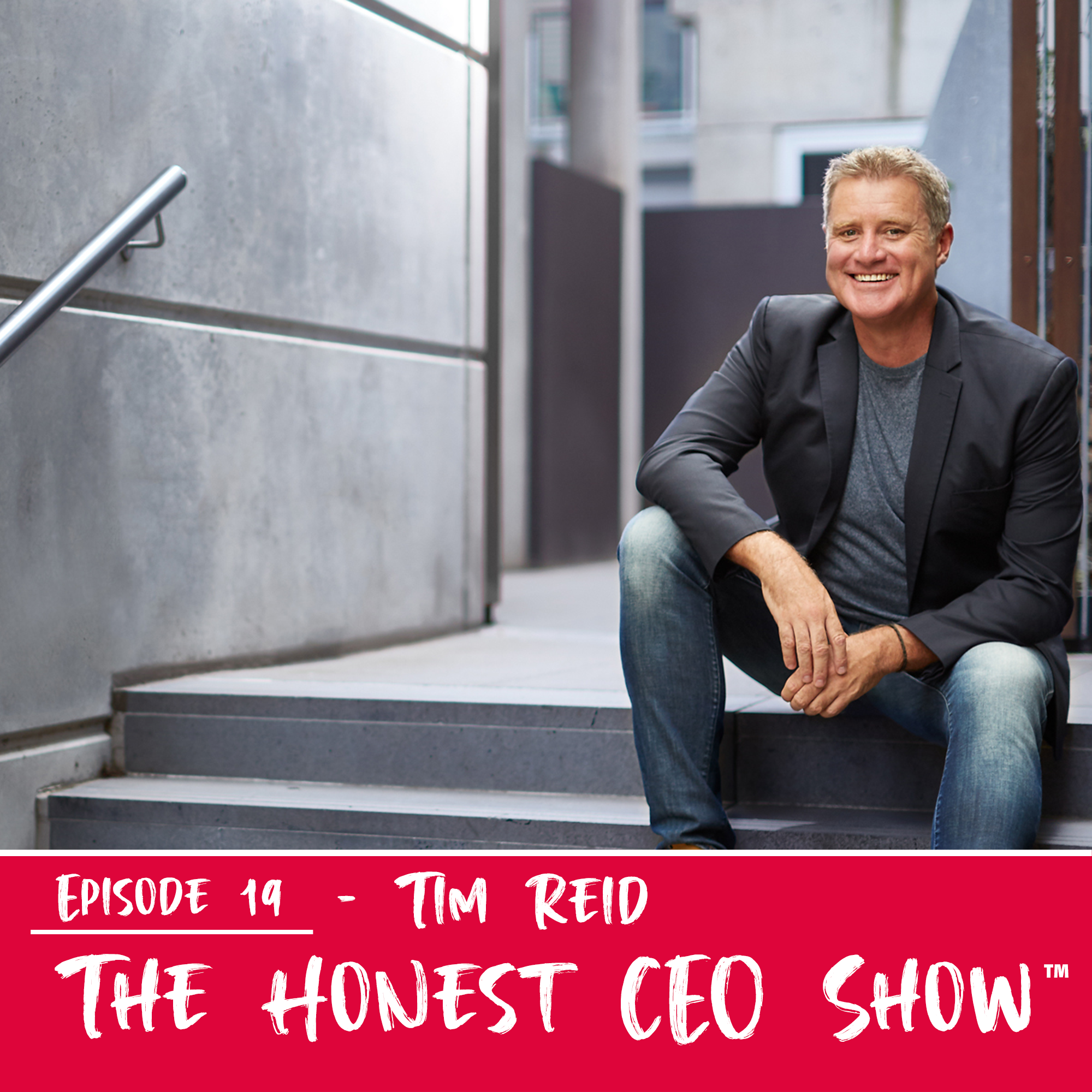
Small Business Big Marketing. How To Grow Your Business Using These Top Marketing Hacks.
My guest today Tim Reid is founder and host of Australia and New Zealand’s number one business and marketing podcast - The Small Business Big Marketing Show, which can also be found on all Virgin Australia domestic and international flights.
Having launched his hit program seven years ago and with well over 300 episodes under his belt, it regularly ranks on iTunes above the Australian Stock Exchange, Alan Jones, Tim Ferris and even outranks Harvard Business School as the number one business marketing podcast.
Tim has built a global audience of motivated business owners in 110 countries, and is also the author of The Boomerang Effect, a popular marketing text. Prior to this, he was the marketing manager for Flight Centre and spent ten years working in Australia’s largest advertising agency looking after the advertising needs of Gillette, AXA, Yellow Pages and Dulux.
Tim was also instrumental in helping AFL legend Jim Stynes raise one million dollars for his youth charity, Reach. Tim travels the world (having spoken at 63 conferences in eight countries in the past 12-months) showing business owners and marketers how to embrace modern marketing methods – gaining success and increasing profits, without spending a fortune.
He believes there’s never been a better time to market anything. Ever!
In this episode we delve into:
- Tim's tips for starting a podcast show.
- The benefits Tim sees from building his personal brand.
- His tips for creating a personal brand.
- Tim talks about how to use outsourcing as a resource for better time management.
- Tim provides an overview of the key low-cost areas business owners can focus on to leverage content marketing to generate leads.
- Tim talks about his book the Boomerang Effect.
- Tim shares the biggest lessons he learned in business.
- He provides advice for anyone struggling in business.
Sit back, listen, and I hope you take home one or two of Tim's wonderful pearls of wisdom.
Episode Transcript
The Honest CEO Show, Episode 19: Tim Reid, Founder of The Small Business Big Marketing Show
Caroline Kennedy (00:20)
My guest today is Tim Reed who is the founder and host of Australia and New Zealand's number one business and marketing podcast, the Small Business Big Marketing Show which can also be found on all Virgin Australia domestic and international flights. Having launched his hit program seven years ago with well over 300 episodes under his belt.
It regularly ranks on iTunes, Above, Australian Stock Exchange, Alan Jones, Tim Ferriss, and even outranks Harvard Business School as the number one business marketing podcast. Tim has built a global audience of motivated business owners in 110 countries and is also the author of The Boomerang Effect, a popular marketing text.
Prior to this, he was the marketing manager for Flight Centre and spent 10 years working in Australia's largest advertising agency looking after the advertising needs of Gillette, AXA, Yellow Pages and Deluxe. Tim was also instrumental in helping AFL legend Jim Steins raise $1 million for his youth charity Reach.
Tim travels the world. Having spoken at 63 conferences in eight countries in the past 12 months, showing business owners and marketers how to embrace modern marketing methods, gaining success and increasing profits without spending a fortune. He believes there's never been a better time to market anything ever. Tim, congratulations on everything that you've achieved to date.
Tim Reid (02:13)
Wow, I feel it's like my 21st or something. Thank you, Caroline.
Caroline Kennedy (02:17)
Now, like me, you've got a strong background in the corporate and private sector and about 10 years ago, you decided to jump ship and become a corporate escapee as the so-called word is. What was the catalyst for that decision?
Tim Reid (02:34)
Well, it's easy to reflect back on. think at the time, I was just a little bit over working in the cubicle to tell you the truth. It was very good to me. I spent 22 years in corporate and learned a lot of great stuff, helped me support a growing family and all that type of stuff. But there were some unmet needs there. And one of them was just the ability to be my own boss, really, and call the shots.
The immature part of me just wanted to wear jeans and a t-shirt to work as well and stop wearing a suit and tie. So I think that was a bit of a part of it. I just, there was a moment in time when, I was in, I've always been in marketing, Caroline. And one of the things was that when I did meet a small business owner, and I consider small business owners to be my people, and have a chat to them about their marketing, they were very appreciative.
They took action and they often called you and said, hey, that worked or, you know, what else can I do? What can I do next? And I love that. Whereas you didn't get that kind of feedback in corporate. It was just, you know, go, go, go and let's meet about this. And what's the next thing after we've got that? And so I thought, you know what, I'm going to see how I can turn this marketing thing into something where I can help small business owners. And that's what I've done.
Caroline Kennedy (03:56)
And that's really about also having that impact, isn't it? I mean, you can have an impact in corporate, but when you are able to help a small business owner and then they can see the results from that, it's more rewarding, isn't it?
Tim Reid (04:08)
Oh yeah. Oh yeah. And they need it more. You know, like they, we, you know, I'm one of them now and they need it more. They need the, um, the help. Cause marketing is a bit of a dark art, know, and I like to shine a bright light on that dark art for them.
Caroline Kennedy (04:24)
Yeah. And I love how you said you wanted to wear jeans and t-shirts. At least you're not sitting around in your pajamas like lot of us. Now your show is Australia and New Zealand's number one business and marketing podcast, a small business, big marketing show. Congratulations. Now tell us where that all began.
Tim Reid (04:50)
So when I did leave corporate, my, what I did start was a marketing consultancy business, like the world needed another marketing consultant. And I thought, well, how am I going to set myself apart from all the others? And I started a podcast and initially it came about because I was lucky enough to, I had a mate who at the time was working, it still is working at a popular radio station in Melbourne and he's working with Hamish and Andy, who I'm sure we all know.
I was lucky enough to use their studio after they'd finished at 6 o'clock in the afternoon. And so didn't, I thought I'm not going to pass up that opportunity. So I'll start my own podcast and see where it goes. And one thing led to another, and it just became really popular over time. Not immediately, but it just led.
One thing led to another and it sort of took over, actually ended up closing the marketing consultancy and focusing on podcasting and public speaking at conferences. And it's been a great journey since then.
Caroline Kennedy (05:57)
And what are your tips for anyone that's interested in starting a podcast?
Tim Reid (06:03)
Start-- number one. I mean like everything like any like anyone asks me a marketing question about where do I start start like just do something recognise that hey okay so podcasting that looks interesting good go and explore podcasting become a listener embrace what is an amazing medium now I can't believe that we can have you and I anyone any other podcaster we can have our own show I think that is incredible in itself that wasn't possible ten years ago
So go to the Apple iTunes store, go to the search box, key in a topic of interest with the word podcast after it. And there'll be someone somewhere in the world producing a show about that topic. Have a listen to it. Have a listen to some other podcasts that are ranking really well and get a sense of what they're doing. And then at that point, you've got an appreciation for the medium. And then if you go, okay, well, I think this is a marketing medium I could use to promote my personal brand or business brand.
Then good, go and understand how you could do that. And it's not hard. again, like all marketing, Caroline, it's what you say, not where you say it that's mission critical. So if you are going to get a podcast, figure out what that's going to be about. I'll talk a lot about this concept in my book of the editorial mission, and you've got to get clear on your editorial mission.
So if you're going to start a podcast, ask yourself three questions. What have I got to offer? To whom and what outcome can they expect. So the editorial mission for my show, which is called the Small Business Big Marketing Show, is marketing tips and tricks for small service based businesses to generate more inquiry. And in me knowing that, that allows me to then decide what my show's about, who I interview, what marketing opinions I share, what listener questions I answer, and it really keeps you on track to create a show that is meaningful to your people.
Caroline Kennedy (08:05)
That's very good advice and certainly when I started mine, as we were talking about earlier, that was the key for me. What do I want to achieve from this? And it was very much about, you know, successful businesses out there that have been there and done it, sharing their insights and tips so that people can actually hear about those journeys, but actually get some insights in regards to what they can do within their businesses too.
Tim Reid (08:32)
Absolutely.
Caroline Kennedy (08:33)
Yeah. Yeah. You've created a personal brand. So tell us about why you decided to build a personal brand and the benefits that you've seen from it.
Tim Reid (08:45)
So do you, are you referring to the fact that I have got timreed.com.au as a website that's just about me?
Caroline Kennedy (08:52)
Yeah. And also, Tim Reed is a brand, you know, as a speaker, as an author, you know, you are the catalyst or you're driving that brand. It's about you.
Tim Reid (09:05)
It sort of came about. So what happened is start the podcast. The podcast lives on a website, smallbusinessbigmarketing.com and that's where all that information about the show lives and all the files and all that stuff. Then sort of like, actually, actually what happened specifically was that about four years into my podcasting career, I got a phone call one day and this lady said, look, you don't know me, but I've got a client who wants to speak to you. And I like, okay, I was picking my kids up at the bus stop at the time. I was like, oh, this is all a bit hectic. I'll call you back. So I called it back.
Now this lady turned out to be, uh, from a speaker's bureau. I didn't even know what a speaker's bureau was. Um, she had a client, an insurance company that, um, was looking for a speaker to do a road show. I didn't know what a road show was around Australia for their insurance clients who were all small business owners.
So long story short, I flew up to Sydney. I'm a Melbourne guy. I flew up to Sydney and met with this insurance company. They booked me for this eight city road show. At which point I'm not, I wasn't a professional speaker back then. The road show went really well. The speaking bureau were surprised because I was sort of untested, unproven guy, you know, in the speaking world. And so they signed me up as an exclusive speaker. So all of a sudden, this is a direct line from podcasting, nothing else. No media training, no public speaking training, no nothing. Here I am getting booked to speak at conferences. So I was almost forced to then go and create timreed.com.au where I could put all that information that wasn't necessarily that important to small business owners, but was important to people who are booking conferences, who wanted speakers around marketing to come in and share a bit of marketing love.
So that website was created and you know needed a showreel, needed bios, needed topics, needed all that stuff that you need when people are looking to book you. So that's the website part of it and then just overall then the personal brand all I can say is that you know when you commit to something and like I have with podcasting other amazing things happen and for me it was building a personal brand my show is now available on Virgin Airlines domestically and internationally out of Australia and that sort of adds to your brand building, your personal brand building and I talk a lot about this in a book that I wrote called The Boomerang Effect and that Boomerang Effect is just when you put effort into your marketing so much so that it returns multiples well beyond getting more clients but I never expected to speaking at 60 conferences a year. I never expected to have a show on Virgin Airlines. These are just things that I never expected you to, someone to say, hey, you've grown a personal brand. These are just things that have happened by committing to a particular direction.
Caroline Kennedy (12:12)
Yeah. And I think the word, you know, that sums it up is it's, it's happened organically for you, hasn't it? Yeah, it has. It hasn't been something that you've just focused on. It just resulted from opportunities. And as you say, on doing something that you love with your podcast and then opportunities have come your way.
Tim Reid (12:32)
And I wonder what would have happened, Caroline, if I had focused on it. If like, I'm not a very planned guy. I'm quite an, I always say I'm an emotional marketer. I don't have a, you know, 20 page business plan. I don't have any of that. And, you know, only today, you know, I have been approached by, a radio station out of Sydney to do some work for them. I didn't reach out to them. I didn't, again, it's just happened organically.
And I just wonder what would have happened if I'd actually actively gone, okay, this week I'm going to channel nine, next week I'm going to target international conference booking agents, you know, and really gone hard on that. But I'm a one man show and I haven't had to do that. Maybe if I wanted to put on five people and build an empire, maybe I would have need to have been more kind of strategic about it.
Caroline Kennedy (13:26)
But maybe it just works because you haven't made the effort and it is organic as well. So it's quite natural, know, the progression of it all. Now, one of our listeners who you know, Sarah Bartholomew, I was having a chat with her the other day and I'd mentioned that we were going to have a discussion today and she said, can you ask a question for me? And it was quite a good one. It's related to public speaking. So, she wanted to know how you secured the Telstra business award gig that you had, know, where you, you traveled around, were a presenter and we were the MC at each of them
Tim Reid (14:03)
Yeah, that's a good question Sarah. Sarah, I think she was here at the South Australian Awards, that would be right wouldn't it? Yes. So great question because I didn't expect to get that job. I mean that's the biggest job I've had all year. So I see the Telstra Business Awards around Australia, eight cities plus the National Awards in Sydney, big audience, big stage and I was really honoured to do it and how I got that was, again, I can draw a direct, a straight line from my podcast to getting that inquiry. Once I got that inquiry, it was really interesting because I was up against people with media profile, TV profile, which I don't have. And I didn't think I had a real shot at it. I thought I was kind of, know, one of the, we'll throw him in the mix for a bit of a laugh. So I thought, okay, what, do I need to do to and that came through one of the bureaus, the speaking bureaus that I'm registered with.
One day I was sitting there thinking, okay, could I get this? Maybe I could get this. So I said to my son Jack, said, come on, mate, we're gonna go down to the local high street and you're gonna video me. So we took my iPhone, there's learnings here like iPhone, amazing marketing tool or smartphone, you don't need any fancy video cameras. I sat outside in a cafe, with shops in the background, Jack on the iPhone. And I did a one, maybe a two minute video to the Telstra people who I hadn't met. So it's just like, hey Telstra, it's Tim Reed here. And for a minute or two, I just said, hey, listen, I'm really honoured to have been considered as a potential MC for your upcoming awards. I love small business. They're my people. you know, that audience is right in my sweet spot. I'd love to be the emcee, gave them a couple more reasons and said, see you later. Now I had traffic in the background. I had a crow across the road on a telegraph pole going and I, you know, it was a very down and dirty video, Caroline, and it got me the job.
Caroline Kennedy (16:19)
Yeah. I think that comes back to, you know, the, the organic thing again, and just being authentic and being the authentic you that you are.
Tim Reid (16:29)
Yeah, yeah. Well, as I say to my kids, you know, if you don't lie, you don't, you don't need to remember what you said. it's just about being, I find it very hard. You know, I see this with a lot of small business marketers when it comes to time to market their business, whether it be speaking at a networking event or writing some brochure copy, they find this weird formal voice where they try and allocate every word to with an inch of its life. And, and it's just, and they don't be themselves. And it's just weird. And it feels uncomfortable for them. And they wonder why it doesn't work. And they wonder why they stop and all that type of stuff. For me, a real role model for me has been Jamie Oliver. I just think that guy has built such an incredible brand, personal brand. And I've never met the guy, but I'm pretty sure that what you see is what you get. And I think we can learn a lot from that.
Caroline Kennedy (17:26)
Yeah. And I would agree with you. Jamie Oliver is very natural. I've never met him either, but you know, just everywhere you see him, he's just being himself and he is unapologetic for, for what he does or what he says. And I love that about him. And I suppose that's why people do.
Tim Reid (17:41)
Yeah, and you know, he's just growing so much into, like we all do, grow into what we create. But now he's becoming very opinionated and really standing up for things and I think it's wonderful.
Caroline Kennedy (17:51)
Yeah. And he can have an impact by doing so as well. And he is having an impact. And many people, as we're talking about public speaking, have a fear of public speaking and they don't necessarily feel comfortable on stage. And, you know, you're an in-demand speakers we talked about before. And I'm sure that you have improved your public speaking or your on-stage presence over the years as we all do, you know, and as an introvert.
For me, when I first started public speaking, was like, was hell basically, you know, and, but over the years I've grown to, just really develop that. So tell me, and I've gone to coaching for it, because I think that that's really important and anything you want to do or develop, how did you develop and grow as a public speaker and particularly because I think you're so effective with the humour that you throw in there as well.
Tim Reid (18:53)
Thank you. Nice pick up. I did what you did. There was a point in time where I've gone, okay, this is getting serious now. This is becoming a primary revenue stream for my business. Better get some coaching. So I employed a couple of standup comedians, not because I wanted to get belly laughs. I just believe standup comedians have the best ability to articulate a message in the shortest amount of time.
That may also include a bit of a laugh or a smile. And it's quite interesting. I was only reflecting on this a couple of days ago in Melbourne on ABC radio. If you look at the presenters on, on ABC radio throughout the day, the majority of them are standup comedians. And I think that's really interesting. They're not there to be funny, but they're just very good people persons. They're very personable. So I saw coaching and what came from that was that the very first day I caught up with my coaches they said what we'd like you to do is arrange find a boardroom and we'll come in and you'll present your current keynote and I thought okay well that's pretty cool I thought they'd roll up we'd have a bit of a chin wag and we just you know get to know each other but it was great they walked in set up a camera very formal and sat down said okay off you go.
So without any further ado, I presented them my keynote and long story short, what they'd identified was that in my keynote around marketing for small business, there was some good stuff. There was some good facts and some good ideas, but it was delivered in a relatively dry way. And so what we managed to do over the course of the next six months was to chunk my keynote down, effectively make chapters out of it if you like. Each chapter or chunk, there is a point to be made. But in order to make that point, you need to find a story that gets that point across. And within that story, it'd be kind of good if you could find a little smile or a laugh. And again, I'm not suggesting you need to be funny. You just need to be emotionally engaging. So all of a sudden, as a result of that, I now have a keynote but is broken up in my mind and also my audience's mind into chunks or chapters. And I then play with either make a point, tell a story, crack a joke, or I might crack a joke, tell a story, make a point. And I just muck around with which way I do that each time. But that's worked an absolute treat.
And now when I go to create another chunk, I just need to say, point am I making here? What's the story that best gets that across? And where's the smile in all of that? And that's just been a really effective way. And I continue now, I've got one particular keynote around this concept of helpful marketing that I don't know, I must have delivered hundreds of times. I want to say 500, but I'll say hundreds. And what I find is that I get more confident with it and by becoming more confident with it I can have more fun with it. I can veer away from where I think I'm going and then come back and be more confident in having a conversation with the audience and stopping and having a laugh and getting a show of hands or an opinion and it becomes really enjoyable.
Caroline Kennedy (22:37)
Yeah. And that's because it's natural for you then at that point, isn't it?
Tim Reid (22:43)
Yeah, it is. Yeah. And it's, yeah, I get why people, mean, I'm everyone's scared of public speaking. What's that great quote about people would rather be in the coffin than delivering the eulogy. But, that's weird. but the idea of, you know, I still get nervous, still get incredibly nervous as I, there's that moment when the MC's reading out your, your introduction and you go, okay, I'm on now I'm on and you're nervous. And even in the lead up to an event, get a sort of buildup of adrenaline and nerves, which is great, as long as you kind of direct them in the right way. you know, my thing around that, Caroline, is that I know, mindset wise, I know a little bit more than my audience. So that's a good thing. know, there's a humility in that. And the other part is I'm here to make their marketing life a little bit easier. And I want them, always say to myself, I've succeeded if my audience want to run out of the room even before I finish speaking and implement an idea that I've shared with them. that's kind of what I take on stage with myself.
Caroline Kennedy (23:59)
I think also to the fact that, you know, you still get nervous and most people do is, is a direct result of the fact that you care that you actually care about what you do and you want to have an impact and influence and add value to the audience, which is so critical. Yeah, absolutely. Otherwise, what's the point?
Tim Reid (24:20)
Well, you know, I like to go and watch other speakers and I always look out for the word, I, I, I, I, me, me, me, you know, and this minute you start going down that path, there's you've lost, I get lost because it's all about them. And again, you just focus on, on the audience. What's in it for them.
Caroline Kennedy (24:44)
Yeah. And you also mentioned before about people going out and taking action and implementing what you talked about. And I, one of the biggest limiting beliefs that I hear from small business owners is that they just don't have enough time. And you were speaking recently at a breakfast that I attended. And I know that there was a lady that actually said to you, don't have enough time. And I must congratulate you on your response to her because you were extremely polite and very empathetic towards her. I actually thought to myself, I could learn from that because from, I, I tend to, what's the word, not be very tolerant. And so I learned something that, that day. So thank you, Tim.
But I wanted to talk about that limiting belief and the fact that we all have the same 24 hours in a day and it's how you prioritise and manage your time. So, and you, you do a lot, you know, with your podcasting, with your marketing, with your social media, with your public speaking, like there's so much going on for you. So can you share your tips for listeners on how you achieve all that and perhaps, you know, how they could benefit from that advice.
Tim Reid (26:16)
Yeah, look, I think one of the things around it's all about mindset. Everything starts in the head, right? Because it's how you view something is going to surely and I haven't studied psychology, but it's got an impact on whether you do something or not. So with marketing, there is a fear many small business owners hold around it. There's a resistance, there's a procrastination because they lack knowledge or whatever they think it's going to cost a fortune. So therefore they don't do it. For me.
I want marketing. I want a small business's marketing efforts to be a hobby. You know, I talk about this because when something's a hobby, time disappears because you can't wait to do it again. You're happy to throw a bit of dough at it and you enjoy it. So you'll find the time. And I've spoken to enough successful small business owners, none of which have used the word hobby, but when they talk about their marketing, they talk about it in a way that it could be, it may as well be a hobby because they really enjoy it. And I think if you get to that point, then everything else should fall into place. So the idea of we don't have enough time to do things is often sort of a disguise for saying, I don't want to do it because I don't like it or I don't understand it or I don't know where to start. But, um, and I think marketing is one of those classic things where, know, it is fun. It should be fun.
I know I'm biased because it's my thing, but I reckon marketing's a whole lot more fun than doing your bookkeeping. know, so it is. And so, so make it a hobby. And you know, I was, I remember showing empathy to that lady in that audience and I did feel for her because she did feel like she was really under the pump. But you know, if we were to dig a bit deeper.
We could ask the questions around how efficient is she with her time? I mean, is she doing things that she just shouldn't be doing? Is she a perfectionist and can't delegate? But if I want to get a little bit more brutal around that, think don't watch the next season of Game of Thrones. Because that'll be there at some point in time. Reward yourself with that. But right now, allocate those two hours tomorrow night to maybe putting together a plan for starting a podcast or for writing your first five blog posts or for starting a Facebook group or contacting the local chamber of commerce and figuring out what you can do there. I think we can find the time. I think the last thing around that Caroline is that I don't think things take as long as we think they do. People think, start a podcast. Well, it doesn't take as long as you think, you know, or certainly doesn't in my mind. I think we can over engineer things.
Caroline Kennedy (29:15)
Yes. Yes, we can. And we can make them a lot more complex than they need to be. starting a podcast. mean, you just, you just got to do it, you know, if it's something that you're really passionate about or, or you like doing, just do it. And continue to do it. think is the key as well, because you hear of so many people that start something and then don't continue with it. And you're not going to have an impact if you don't keep doing it.
Tim Reid (29:33)
Yeah, I look at that. There are two. It always sounds a bit flippant to say just start and make sure you keep doing it. But there is some truth. There is real truth around both of those things. I always say to people like, don't. People want to know how long should they do it for? And I think a lot longer than most people are doing it for, because most people give up again. Well, let's use podcasting as an example, or creating a YouTube channel or starting a blogging strategy.
I'd say six months to create a piece of content, good quality content, once a week for six months, and don't look at how many page views you're getting, don't look at how many inquiries you're getting off the back of it, don't ask your staff, hey, does anyone mention the videos we're doing? Don't look at any of those scoreboards and just head down, up for six months and see what comes of that because the type of marketing that I talk about, which I refer to as helpful marketing, it doesn't have a quick response time in the sense of you're not going to put a podcast episode up today and have an amazing start, something amazing happen tomorrow. You might, but it's unlikely. Um, so you've got to invest time and, and, and make it just part of what you do.
Caroline Kennedy (30:59)
Yeah. And I suppose the barriers to entry now around content creation and modern day marketing are really low. That's right. So what are the key areas you believe business owners should focus on with content marketing? they're, if they're time poor, where would you recommend they start?
Tim Reid (31:22)
So the ability to create content is incredible these days. I think we just live in an incredible time. Whereas the idea of creating content years ago was either just, it was prohibitively expensive really. But now with the fact that we've got a smartphone and the internet, I mean, we're away. So that therefore means that there's way too much content out there. And therefore it'd be easy enough for a small business owner to say, I'm not gonna add to that. And I hear that a lot.
So my argument to that is, well, the content's not gonna go away. Someone in your industry is going to be creating it. It may as well be you. But create helpful content. Not just go and create content. Like for example, I see blog posts that talk about the fact that we just won an award or we've just put on a new staff member. I don't find that a very, as a buyer, as consumer, I don't find that very interesting.
But what if you created a series of blog posts that really informed me and helped me make a more informed purchase decision potentially in your favor. So go and identify all the questions that your prospects have and start to answer them. Whether it be on video or a blog or infographics or you start a forum, that's a really good place to start being the most helpful person in your industry. I call that just a simple knowledge center and put it on your website.
But then if you want to go that next step and that's what you and I, what you've done with this show and what I've done with the Small Business Big Marketing show is to then all of a sudden go, okay, well, what else can I do? How do I go from being educational to entertaining? And I don't mean again necessarily being, you know, funny stand up, ha ha.
Caroline Kennedy (33:08)
Well I'm glad you don't because I'm not funny.
Tim Reid (33:11)
But being conversational and being emotionally engaging and so all of a sudden you can take it and start to create some content that is really interesting and people are wanting to share it. And again, people again at this point go, but I'm going to run out of things to say. You don't. Because just what happens is, like I might have said something in this conversation with you and you've gone, that's kind of interesting. Speaking coaches. I might go and interview a speaking coach. So then all of a sudden you've got your next content planned, right? And then it goes on and on and on. So I think there's a mindset around this in terms of content creation is that someone needs to be the most helpful in your industry. It may as well be you.
Caroline Kennedy (34:00)
Yeah. And that's really good advice, because it's not about you. It's about what you can contribute and how you can add value. And if you just switch that around, then it's amazing what opportunities can come from that. Absolutely. And it's not even about the opportunities. It's just about wanting to be helpful and add value to people. If they get something out of it, then you know, you've, you've done something good.
Tim Reid (34:27)
Oh yeah, yeah, yeah, that's right. And when you do something good, know, again, we're in business to make profit and we're in business, know, we market to generate inquiry. But some of the stuff that we've spoken about today, and this is the boomerang effect again in action is that you'll be amazed at what happens. You know, I'm constantly amazed at what's happened with my journey and other business colleagues who follow this kind of path of helpful marketing.
Just other things happen because you're doing good, you're helping, you're being useful and other things, other opportunities will come. Like for me it was speaking and you know being on Virgin and all these things and it's just amazing what the universe delivers.
Caroline Kennedy (35:10)
Yeah. Especially when you don't expect anything.
Tim Reid (35:15)
Just creating a podcast. Yeah.
Caroline Kennedy (35:18)
Now the boomerang effect, that's your book. You've just published it. Tell us about that.
Tim Reid (35:25)
Well, as I said, it's just that concept of, you know, what you put into your marketing, will return multiples. It's based on the concept of helpful marketing. go through all the different, well, first of all, I address a lot of the limiting beliefs that people have around marketing and we knock them on the head and talk about the concept of getting your message right first before you worry about where to put it.
So I talk a lot about the need to create a, how to create a strong brand, how to get your pitch right, how to make sure that what you're creating is consistent across all your marketing touch points, from your business card to your website to your social media presence to the way you present yourself on stage to the way your slide deck looks, all that type of stuff. So you're building a beautifully consistent brand. And then I talk about getting actually that message out there via all the marketing channels that we've spoken about earlier and just being pleasantly surprised at what will come from that one thing that this helpful marketing concept also delivers is warm leads.
So I know there's probably a lot of listeners who don't like the idea of selling, cold calling, whatever it may be. And I find that if you pay attention to the way you market yourself, you'll all of a sudden have people approaching you. And I find this all the time. People ring me and say, hey, listen, you don't know me. But I feel like I know you because I've been listening to your show for a couple of years and you know, do you mind, would you consider coaching me or would you speak at a conference or would you do that? And that's kind of cool because I too don't like selling. kind of get a bit kind of, I always feel like I need a shower after I try and sell something. So the book was my way of explaining the boomerang effect, giving examples of how helpful marketing will lead to the boomerang effect happening.
And you know, I put off, and as a marketing channel, you know, the book is fantastic. It's a glorified business card. You know, when my competitors handing over their business card, I can hand over a book. I only did it this morning when I got a phone call from a new speakers bureau who wanted to ask, who asked if I had some availability in February. my first thing is we'll check dates and then, Hey, what's your address? Let me send you a book. And again, that's just a nice positioning statement.
And I put it off for a while because I sort of carried this story, Caroline, that I publish a podcast episode every Tuesday, every week of every year. And I thought I don't need a book. I don't need to publish a book, but I'm glad I have because it's, it is nice to have something tangible that you can, you can gift and sell. You know, I sell a lot at conferences as well.
Caroline Kennedy (38:07)
Yeah. And it's another medium people consume differently as well. So, know, um, the book I'll link it, uh, in the show notes today. So any of your listeners want to grab a copy, which I recommend that they do. And yeah, we'll go from there. So what are the biggest lessons you've learned in business? Big question, I know.
Tim Reid (38:30)
Big big question. I think you got to do what you love and that continues to change for me. I don't get bored with things but I need to make sure because it's just me that I'm doing stuff that I feel passionate about. So for me I've just taken an interest in an outsourcing business in the Philippines and for me that's exciting because I see the positive impact that's having on so many small business owners who are finding the cost of doing business in Australia prohibitive. So I think you got to do things that you love. I think you got to realise you can't do it all. And whether that means putting on a team or there's a wonderful, spoke to a great lady a few weeks ago on my show who talked about the three D's around delegation, which is you created a list.
And then you write, basically you create a list of everything you do in your business and you either delete it, so I get rid of it, delegate it, pass it on to someone else or you do it. And I've not been very good at that. I have been a bit of a control freak and I love that. I love, but I love a good system. So it was lovely to hear that sort of 3D approach. What else have I learned in business? That was the question. I think you got to get out.
And I'm going to guess there's probably a few solopreneurs listening to this, yeah? Sort of micropreneurs? Get out. Get out of that dressing gown and go and meet someone. we can live in such a virtual world these days. I think it's really scary and a little bit sad as the father of three teenagers. So I encourage that sort of face-to-face interaction.
One last little, it's not so much what I've learned in business, but it is a nice little marketing trick that my speaking mentor, who's not my coach, but a fellow who I just look to for guidance around my speaking business. And it's making seven calls a day, five days a week. And again, I think we forget to kind of do that. You know, we do a bit of a Facebook, you know, we might hit someone up with a Facebook message or an email or something. And I don't think anything beats kind of getting on the blower and reconnecting with an old client or a new referral.
Caroline Kennedy (40:52)
Yeah, and I agree with you. And that's so true. That's something I neglect to do because we do use social and technology as a way of communicating and we forget that people buy people, you know, it's a people economy.
Tim Reid (41:07)
Let's set your listeners a challenge. Hopefully there's been some practical stuff that they can run away with already from this chat. go ahead and make seven calls today or tomorrow, depending on what time you're listening to this. And then report back. You've got show notes, I'm guessing, where people can leave comments, Caroline? Righto. Let us know what the impact of those seven calls were. Good, bad or indifferent. But I'm pretty sure something will come of it. Someone, one of those calls will say, let's meet, I've been meaning to call you, I'd like to buy 10 of those, whatever it is, you'll be surprised. So there's a nice little exercise to do.
Caroline Kennedy (41:47)
I think that's a great exercise. Thanks for that, Tim. Finally, what does the future look like for you?
Tim Reid (41:55)
Lying on a hammock between two very big palm trees.
Caroline Kennedy (41:59)
Sounds good.
Tim Reid (42:02)
Well, this new business in the Philippines, which is called Cornerstone Business Solutions is taking up some time at the moment because I'm doing two, at least two tours a year now over there where I take a handful of small business owners over to see what all the options are for a small business owner in the Philippines. Everything from, you know, employing someone individually to putting on a team, to having someone work from home, to visiting call centers and so.
I'm excited about that. That's pretty new for me. it was actually my way of, because everything I do, Caroline, I have to show up for speaking, podcasting, my forum, all those things, whereas Cornerstone is a little bit less hands on. So I'm excited by that.
Caroline Kennedy (42:49)
It's a great concept and organisation. And what David is doing is, um, you know, it's going to be, it's really effective for small business owners to be able to delegate, as you say. And, and that's so important too. Um, because you can't do everything and sometimes you've just got to prioritise and delegate what's not important.
Tim Reid (43:18)
Yeah, well, it's an exciting concept and I didn't realise just how needed it was until that this fellow David, the all referencing is he owns Cornerstone with his wife, Alison, and they're a Sydney couple who have moved over there with their two girls. And I had him on my show about 12, 14 months ago and he shared how he turned his business around through outsourcing and subsequently had started this Cornerstone business in order to allow other business owners to access it. And all of a sudden he was absolutely inundated.
And I really sort of stood up and paid attention to that, not realising just how under the pump small business owners in Australia are and just how expensive it is to run a business here. I'm not suggesting, this becomes, we don't have time for this discussion, but except to say that it sounds a little bit un-Australian what I just said, and it's not about moving the whole of your business offshore. It's just about being smart about what you do offshore and outsource versus what you do here because what it's going to do is free you up with time and money to do other things locally that will have a greater impact on growing your business. yes, I think that's--
Caroline Kennedy (44:27)
Sorry, doesn't matter whether it's offshoring or outsourcing. The concepts are the same. It's about giving you more time to be able to focus on being strategic or growing your business.
Tim Reid (44:38)
That's it. Work out what your hourly rate is. And if you can employ someone a lot cheaper to do some of those things that you're doing, then it makes economic sense. So I'm going to do more podcasting. That's about it really. second boy, I've got three kids. The second one just finished school. So I've got one left and I think that's sort of opening up a bit of on the horizon I can see little bit more travel just with my beautiful wife and I just you know seeing a bit of the world and doing a bit more a few more date nights you know.
Caroline Kennedy (45:15)
Yeah, you lose them when you have kids, don't you? Yeah, well, it sounds like there's a lot of exciting things happening and particularly with the travel. Travel, you know, we work so hard, it's important to enjoy life as well.
Tim Reid (45:33)
Exactly. agree with that.
Caroline Kennedy (45:34)
Thanks Tim for your time today, I really appreciate it.
Tim Reid (45:39)
It's been an absolute pleasure, Caroline. Thank you for some wonderful questions and good on you for being a fellow podcaster, Thank you.
Caroline Kennedy (45:46)
And thanks for being an inspiration to start.
Don't miss an episode of the The Honest CEO Show by subscribing on iTunes, Spotify and if you love our podcast leave a review.
Your host
Connect with us on twitter
Email us
OVER TO YOU…
What was your biggest take away or ah-ha moment from this episode?
Leave your comment below.
We'll respond to each and every comment.
Share the love!